A R100 note has Nelson Mandela’s face on it. You can feel the raised ink, the paper texture, the slight crackle when you fold it. Hand that same R100 across a casino cage and you get back a smooth clay disc, usually red or blue, with a casino logo and maybe some edge spots. It does not weigh like a hundred rand, nor does it buy groceries or pay a petrol attendant. It is purpose-built to stop being money the moment you hold it.
This is not an accident or a conspiracy. Chips exist because cash on a blackjack table would be unworkable: counting, verifying, slowing every hand to a crawl. The efficiency comes with a side effect that operators understand perfectly well. The second your rand becomes a chip, it enters a different mental category. It becomes game money, and game money spends faster.
Why a chip never feels like a note
The physical difference is obvious but underrated. A R100 banknote is 146 millimetres long, printed with specific colours, carrying security features you can feel with your thumb. It is recognisable at a glance across a dark bar. You have handled thousands of them. Your brain has built an entire architecture of association around what that object means: hours worked, bills paid, the particular anxiety of having too few of them at month-end.
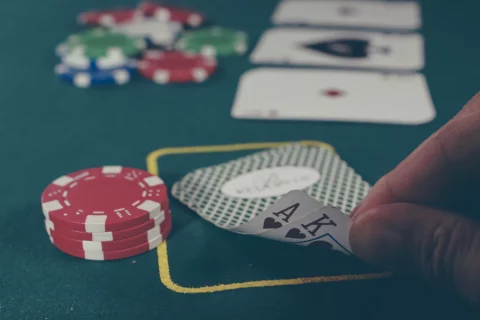
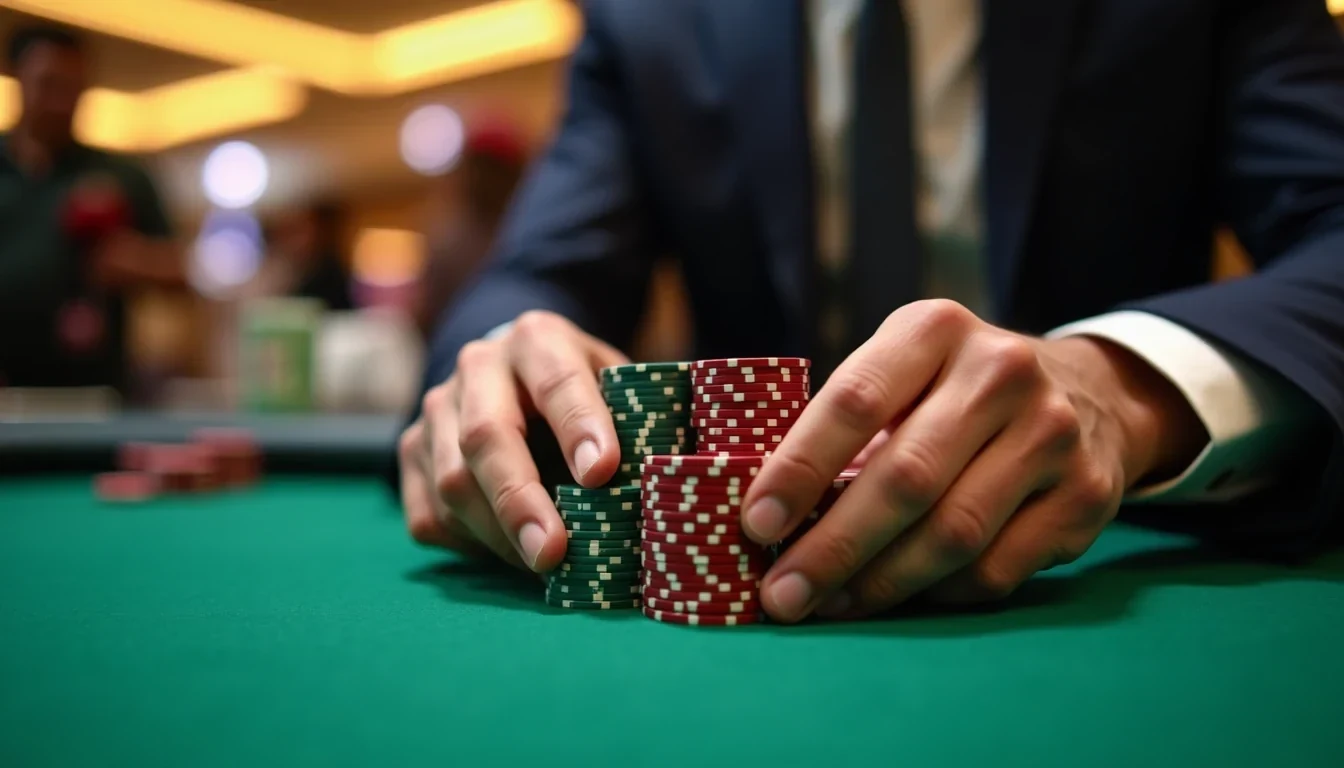
A chip is none of these things. It is uniform in size across every denomination. The R5 chip and the R500 chip share the same weight, the same click against felt, the same smooth edge. The only difference is colour, which is a far weaker anchor for value than the complex sensory profile of physical currency. You must read the number printed on the face. You must actively think. Active thinking is exactly what the casino environment is designed to interrupt: the noise, the lights, the pace of play, the social pressure at a full table.
The research on this is not ambiguous. Behavioural economists call it the “substitution effect” or simply “decoupling”: when money is transformed into an intermediary, the pain of spending diminishes. We know this from gift cards, from contactless payments, from every study showing that people spend more with cards than with cash. Casino chips are the purest form of this principle. They are money that has been deliberately stripped of every cue that makes money feel real.
The digital version is even cleaner
If chips are abstract, online betting credits are abstraction squared. Deposit R1,000 via EFT or OTT voucher, and what you see is a number. It might be green. It might have a little coin icon beside it. That is the full sensory experience. There is no physical object to lose, no note to fold and unfold nervously, no moment of handing something over to another human being.
The separation happens earlier in the process, too. With a land-based casino, you at least had the walk to the cage, the exchange, the physical act of conversion. Online, the rand leaves your account and becomes “balance” before you have placed a single bet. The transition is so seamless that many players barely register it as spending at all. It feels like loading a game, which, in one sense, it is.
This is where the psychology becomes genuinely costly. A punter with R200 in his online account might place a R50 bet on a live tennis match without the same hesitation he would feel peeling a Mandela note from a thin weekend wallet. The number clicks down. The number clicks up if he wins. The entire transaction has the texture of a scorekeeping system rather than a financial one. Until he tries to withdraw, at which point the friction returns: verification, pending periods, minimum thresholds, the sudden realisation that this was real money all along.
The R100 chip that stopped being R100
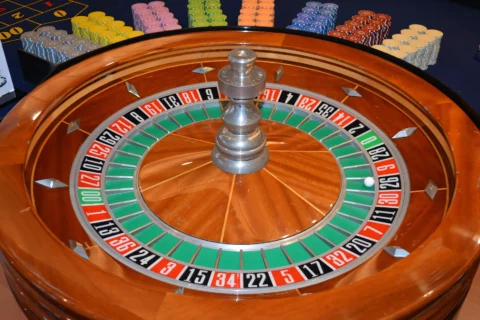
The transformation happens quickly. You buy in for R500 at a roulette table on the Durban beachfront. You get twenty R25 chips, green ones, and you have decided to play conservatively. Your first bet is four chips on red. Eighty rand. The croupier spins, the ball drops, you lose. You push four more chips out. Another eighty. Within five minutes you have placed three bets and your stack is down to R260, but you have not once thought “I just spent two hundred and forty rand.” You have thought in units: twelve chips, three spins, bad run.
The unit bias is part of it. Four R25 chips do not stack to the same psychological height as a single R100 note, even though the value is identical. The round denominations help the casino too. R25 is a natural betting unit; R100 is a natural buying-in unit. These are not rand amounts that correspond to everyday purchases. They are game increments, and your brain starts treating them as such within minutes of sitting down.
I have watched players at a Johannesburg casino push two R500 chips into a pot at Texas Hold’em with less apparent stress than they show splitting a dinner bill. The chips have become poker units, not money. The dinner bill requires a direct conversion to real-world value: this much for the steak, this much for the wine, here is what I owe. The poker bet requires no such translation. It exists in a closed system where the only relevant question is whether you win the hand.
What the bookies figured out
This same decoupling operates in sports betting, though the mechanism differs slightly. Your balance with a licensed bookmaker is already abstract, but the critical moment is when you place the bet. A R100 bet on the Springboks to win by more than 12 points is presented as a single line in a betslip. The potential return is calculated automatically, displayed in green, rounded to two decimal places. The R100 itself has vanished into a stake field.
The bookmakers understand this. They offer “quick bet” options, preset amounts, one-tap confirmations. Every friction point that might remind you this is real money has been polished away. The betslip does not show what else R100 could buy. It does not ask you to confirm by re-entering your password. It accepts your decision in the half-second before doubt might arrive.
Some platforms have gone further, introducing their own token systems, virtual currencies, or gamified loyalty points. These are chips by another name: intermediaries that sever the direct connection between the wager and the rand it represents. The closer the system can get to pure abstraction, the more freely it is spent.
The only countermeasure that works
There is no reform proposal here. Chips will remain essential for table games. Online balances are not reverting to cash-on-delivery. The efficiency is genuine and the industry runs on it. The player must maintain a bridge back to reality while operating inside these abstract systems.
The bridge is simple and unpleasant: convert every stake back into rand before you commit it. Not approximately. Exactly.
That stack of four green chips is R100. Name it. A R100 note, an hour of work for many South Africans, a week’s worth of petrol for a motorbike, a decent bottle of wine. The R500 buy-in is a month’s data and streaming subscriptions. The R50 online bet is a takeaway dinner. This is not moralising. It is calibration. The abstraction works because it suppresses this comparison. Deliberately restoring it is the only individual defence against a system designed to make you forget.
I do this poorly more often than I do it well. At a busy craps table, with the rhythm of rolls and the collective groans and cheers, the last thing I want is to perform mental arithmetic about grocery equivalents. But the times I have stopped, held a chip up, and actually said “this is two hundred rand” to myself, I have either sized down or walked away. The abstraction is powerful because it is comfortable. Reality is the discomfort.
The colour of your money
Casinos have known this since the 19th century. The first chips were introduced not to deceive but to standardise, to prevent disputes over currency and to speed play. The psychological effect was understood later, then refined, then engineered. Modern chip design is a small field: weight, colour, edge pattern, all optimised for the table and, secondarily, for the mental state they produce. A heavy chip feels valuable without being specific about what value means. A bright colour attracts the eye without triggering the associations of currency design.
Digital credits complete the project. They remove even the physical residue. What remains is a number and a willingness to treat that number as less serious than the number in your bank account, even when they are the same number, even when one can become the other with a few clicks.
The house edge is mathematical and unchangeable. This other advantage, the abstraction advantage, is psychological and entirely within your power to address. Not to eliminate, you will never eliminate it, but to notice. To name the rand inside the chip, the real money inside the balance, before you push it forward. The game is more honest that way. And honesty, in a casino, is something you have to supply yourself.