
A withdrawal tax is not a tax; it is a scam trying its first trick with a straight face.
I’ve seen enough bad bets, dodgy promises, and overconfident strangers with a logo to recognize the pattern. The message lands like good news, then the small print arrives with a payment request, then the number gets bigger, then the person on the other end starts sounding like your bank manager on a bad day. If a betting app says I’ve won money but wants cash before I can touch it, I am not looking at a bookmaker. I am looking at a con with a sports shirt on.
The jackpot that appears out of nowhere
The first tell is usually absurd on its face. An SMS, an email, a WhatsApp message, sometimes even a social media ping, says I’ve hit a jackpot, unlocked a bonus, or won a prize from an account I do not remember opening. This detail is important. If I never signed up, never funded the account, and never placed the bet, then the “win” is already standing on one broken leg.
The next move is always the same. A support agent, “manager,” or “claims officer” says the money is real, but it can’t be paid yet because I need to settle a withdrawal tax, a release fee, or some other invented charge. They dress it up differently each time: administrative fee, KYC fee, verification charge, anti-money laundering clearance. The label changes, but the trick does not.
The National Gambling Board warned about fake betting platforms and apps during the 2026 football season, and it was blunt about the essentials. Legitimate bookmakers do not demand taxes or release fees before winnings can be withdrawn, and they do not promise profits. A real bookmaker takes bets; it does not send out surprise treasure maps to people who never asked for them.
The fee is the trap
The whole scam depends on one weak moment, the one where the victim thinks, “Fine, I’ll pay this once and get the money.” That is how the machine feeds. The first payment does not unlock anything. It proves the target is reachable, hopeful, and willing to cough up more.
After that, the demands tend to multiply. A currency conversion fee appears, then a security fee, then a server charge, then some nonsense about compliance, account lifting, or urgent clearance before the window closes. The caller gets busier, the deadline gets shorter, and the tone gets sharper. Every new fee is framed as the last one, which is scammer code for “send more money and we’ll think of another reason tomorrow.”
I’ve never seen this end with the victim getting paid. The money goes out. The winnings do not arrive because the winnings were never there. The “balance” on the screen is theatre. The receipts, certificates, and fake banking slips are props. Once the first fee is paid, the only thing that reliably clears is the scammer’s appetite.
People hate admitting this to themselves: paying does not repair the situation. It deepens it. The con artist now has a live one on the line, and live ones get pressed until they stop answering or run out of cash.
Real bookmakers do not work like this
A licensed bookmaker makes money from the price of the bet, not from extorting a customer at the withdrawal stage. That is the basic business model. If the book is legal, provincial, and properly licensed, it should show the license details somewhere obvious, including the issuing provincial board. If it hides that information, uses a misspelled domain, or pushes you to download an app from a random link instead of a proper store, I would not trust it with a ten rand note, never mind a payout.
In South Africa, the legal route for online betting runs through provincially licensed bookmakers. This is the line the regulator and the provincial boards care about. If a platform claims to be legitimate but cannot point to a real license number from a board like the Western Cape Gambling and Racing Board or the Gauteng Gambling Board, then it is not asking to be believed. It is asking to be excused.
There is also the tax angle, and scammers love to muddy that water because it sounds official. Casual gambling winnings are generally not taxed as ordinary income, while professional gamblers can have a different treatment with SARS. Either way, a bookmaker is not supposed to invent a “withdrawal tax” and collect it on the government’s behalf. If SARS wants money, it does not send a stranger on Telegram to collect it by noon.
What the scam sounds like in your inbox
The language gives it away if you slow down long enough to read it like a human being instead of a hopeful punter. The message starts with celebration: big win, lucky draw, limited-time prize. Then the pressure comes in.
There is usually a nudge that sounds urgent enough to make weak people rush. “Pay now or the withdrawal expires.” “Your account will be frozen.” “This is the final step.” “A senior agent is waiting for your payment confirmation.” That kind of wording is built to cut off the pause that would save you. Scammers hate silence because silence gives the brain time to remember that no one owes money to a betting app they never joined.
Another red flag is the support handoff. One person claims the fee is routine. A second one says it is mandatory. A third person turns up to sound more official and asks for a screenshot of the transfer. That parade of voices is meant to create weight, as if three lies together somehow become a procedure.
The best test is simple: if a stranger tells me I have won money on an account I do not remember opening, my luck has not improved. My inbox has just become a crime scene.
What I would do instead
The first move is to stop talking to them. No arguing, no bargaining, no “let me just understand this.” Delete the message, block the sender, and do not click anything they sent. If they claim to be a known bookmaker, I would open the bookmaker’s official site myself by typing the address directly, then check my actual account there. Not through their link, not through a shortened URL, not through whatever app they are pushing like it’s a factory special.
Then I would look for the license details. A real operator should name the provincial board that regulates it. If that information is missing, buried, or impossible to verify, I would treat the whole thing as a fraud with branding. If a site is pretending to be a bookmaker but cannot survive a basic licensing check, it has already failed the only test that counts.
If they ask for money before paying out, I would stop there. No fee, no “small last payment,” no exception because the amount is “only” a few hundred rand. That money does not buy freedom from the scam. It buys a more expensive version of the same scam.
The right response is to report it. The National Gambling Board is the obvious starting point, and the police cybercrime route is there for a reason. Keep the screenshots, numbers, account names, payment requests, and dates. Once the messages are gone, the story gets blurry very fast. Scammers count on that too.
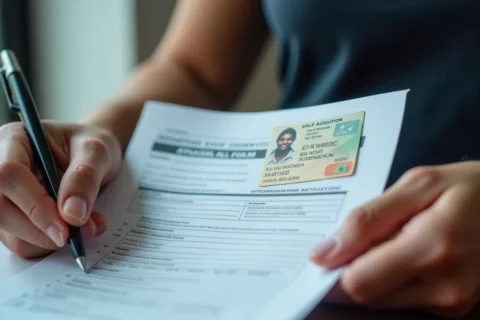
A legit bookmaker can ask for identity checks under FICA, but that is not the same thing as asking you to pay to prove you are you. Verification is paperwork. A withdrawal tax is theft wearing a name badge.