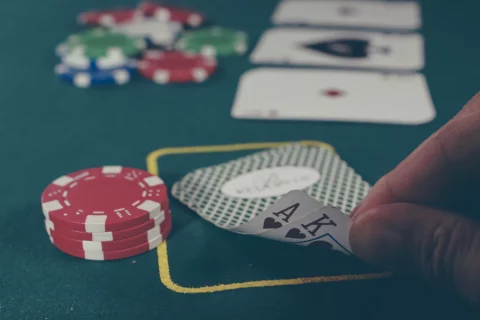
The most expensive lie in gambling is the one you tell yourself after a bad run: that the game remembers what it took and will pay it back if you just stay long enough.
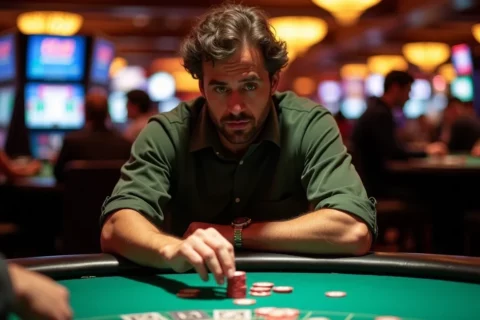
I have watched this happen at the blackjack tables in Durban and on the stools in front of slots in Bloemfontein. A player hits their limit, not their planned limit, but the real one, the point where the wallet starts to hurt. Then comes the pause. The jaw tightens. The next bet is bigger, not smaller, because the money already lost has stopped feeling like spent cash and started feeling like something stolen, something owed. The entertainment budget has become a debt collector, and the player is now working overtime to collect.
The Moment the Game Turns Creditor
A specific psychological pivot separates a losing session from a dangerous one. It happens when the objective stops being “I came to have a good time” and becomes “I need to get back to even.” The lost Rand stops registering as the cost of an evening out and restructures itself in the mind as an outstanding balance. The machine, the table, the bookie all become debtors in a ledger that exists only in the player’s head.
This is not weakness. It is a predictable cognitive response. The brain hates unresolved loss. Psychologists call it loss aversion, the tendency to feel the pain of losing roughly twice as intensely as the pleasure of an equivalent gain. A player down R800 does not feel like someone who paid R800 for entertainment. They feel like someone who is R800 underwater and needs to surface. The gambling session transforms from leisure into emotional repair work. Every subsequent spin or hand is now freighted with the weight of recovery.
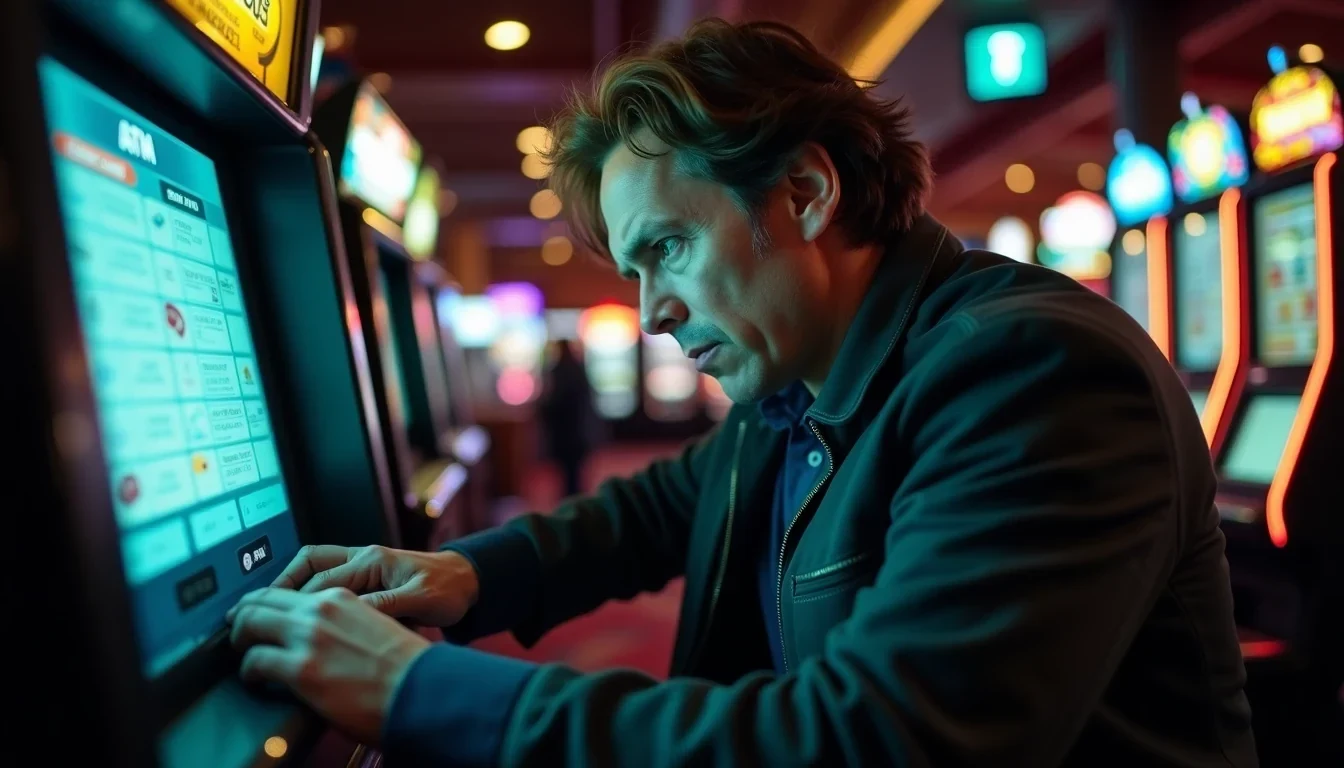
The decisions that follow this pivot are almost always worse. Stakes escalate. Time limits dissolve. The player who walked in with a R500 entertainment budget and a plan to leave at 9 PM is now at the ATM at 11:30, feeding the machine money marked for groceries because the original R500 has become a hostage and the only way to free it is to keep playing.
Why the Math Does Not Care About Your Feelings
This part should be printed on every betting slip. Each wager you make after a loss carries exactly the same probability structure as the one before it. The roulette wheel does not know you just lost. The slot’s random number generator has no ledger. The bookie’s margin was built into the odds when they set them this morning, and your emotional state changes none of it.
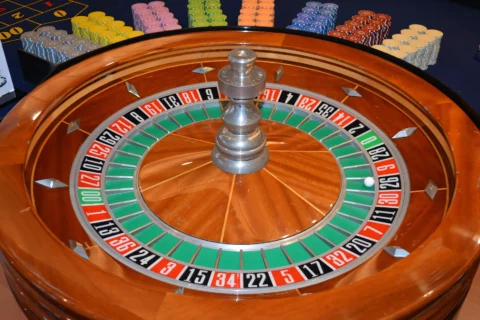
Take European roulette, the single-zero version you will find in licensed South African casinos. The house edge is 2.70%. For every R100 you bet, the statistical expectation is that you will get back R97.30 over the long run. This holds whether you are up R1,000, down R1,000, furious, calm, or crying into your drink. The edge applies to the next spin, and the next, and the next, with mechanical indifference.
Slot machines operate the same way. A game with a 95% RTP (return to player) will return R95 for every R100 wagered across millions of spins. Not your millions of spins, but the machine’s millions. Your session is a blip, and within that blip, the outcome of spin 47 has zero correlation with spin 48. The near-miss you just experienced, two jackpot symbols lining up while the third falls one position short, is not a signal that the machine is “getting warm.” It is a designed feature of the game’s mathematics, no more predictive than a coin flip.
The gambler’s fallacy, the belief that a string of losses makes a win more likely, is the engine that powers the chase. After six reds in roulette, black is not “due.” The probability remains 18/37 on the next spin, exactly what it was before. The sunk cost fallacy piles on top, convincing the player that stopping now would waste the money already lost, when in fact every additional Rand wagered is simply more capital exposed to the same unchanging edge.
Increasing your stake after a loss does not improve your odds of recovery. It accelerates your exposure to the house advantage. A player chasing with doubled bets is not fighting the casino. They are volunteering to lose faster, on worse terms, with money they had not originally planned to risk.
The Session Limit as Hard Architecture
The only practical counterweight to this psychology is to build the wall before you walk in. This is not a guideline or a preference, but a hard architecture that outranks your future emotional state.
Decide your loss limit in the cold light of before. Not after the first bad beat, not after the second drink, but before you touch a machine or open an app. The number should be an amount you can lose entirely and still pay every bill due this month. If losing it would require explanation to anyone, it is too much.
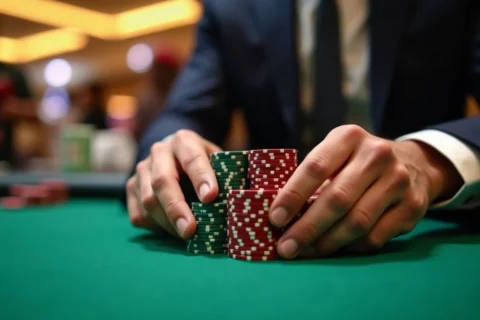
For land-based play, the tool is crude and effective: cash only, cards left at home. Walk onto the casino floor with your session limit in your pocket and nothing else. When the cash is gone, you are done. The friction of finding an ATM, of walking back to your car, of explaining yourself to the cashier, is the architecture working. Online, use a dedicated debit card linked to an account that contains only your gambling allocation. Never a credit card. Never your primary account. The licensed South African bookmakers, Hollywoodbets, Betway, Supabets and the provincially regulated operators, offer cool-off and self-exclusion tools. Use them. Set a 24-hour block if you hit your limit and feel the pull to continue. The block is a wall you built while sane, protecting you from yourself when you are not.
Time limits matter too. A three-hour session with a R500 loss cap is a different proposition than an open-ended evening with the same cap. The longer you play, the more decisions you make, and the more decisions, the more opportunities for the edge to grind. Set an alarm. When it sounds, assess where you stand. If you are down your limit, leave. If you are up, consider whether you are still playing for entertainment or whether the ledger in your head has started forming.
What the Chase Actually Costs
The real damage of loss chasing is not the money lost in the chase itself, though that is bad enough. It is the money that gets recruited from elsewhere: the rent money, the school fees, the emergency fund. An affordable loss becomes catastrophic when it opens a hole that other obligations fall into.
I have seen players explain this after the fact, always with the same hollow logic: I had to try to get it back. The R500 became R1,200, and the R1,200 became R3,000, and at some point the original loss was so buried under new losses that the player could no longer face the accounting. The game never owed them anything. They owed themselves the discipline to stop, and they failed to collect.
The house edge does not fluctuate with your desperation. The odds do not bend to your narrative of injustice. The only variable you control is how much you expose, and for how long. Set the number. Build the wall. When the limit hits, the debt you imagine the game owes you is revealed for what it always was: a story you told yourself to keep a losing session alive.