A bookmaker’s colour scheme tells you nothing. A licence number tells you whether the place is real.
This is the whole trick with scam betting sites. They borrow the look, the logo, the font, sometimes even the exact shade of purple that made people feel comfortable the first time they saw the brand. Then they wait for someone to click a forwarded link, chase a promo, or trust what looks familiar. Familiar is cheap. A provincial licence number is harder to fake, and in South African betting that is the only thing worth trusting before you put money on the line.
The look can be copied in minutes
The scammer’s job is not to build a proper bookmaker, but to make you stop thinking.
Copies lean hard on visual imitation. They borrow the name, the logo, the colours, the layout, and sometimes the tone of the customer messages. They will even dress up a site to look like one of the better-known local operators, then push it through WhatsApp, Facebook, Telegram, or some other channel where people tend to click first and ask questions later. One bad habit feeds the next. A forwarded link looks “safe” because it came from someone you know. A copied logo looks “safe” because you have seen it before. The whole scam lives in that lazy half-second.
Domain names are where they usually slip. A proper operator has a real official address. A fake one often swaps a letter, adds a hyphen, pads the name with extra words, or uses a lookalike address that feels close enough if you are scrolling on a phone. If the site name and the web address do not line up cleanly, I treat that as a warning, not a technical detail. Scammers hide behind technical details.
The licence number beats the logo every time
The National Gambling Board launched its verified-operators portal in April 2026. This is the first place I would look if a bookmaker is trying to get clever.
The portal lets you check whether an online bookmaker is actually licensed through a provincial gambling board, what its official domain is, and whether the contact details match the real operator. A gambler should be able to verify this information before depositing a cent, because the alternative is handing money to a site that may disappear the moment it gets awkward.
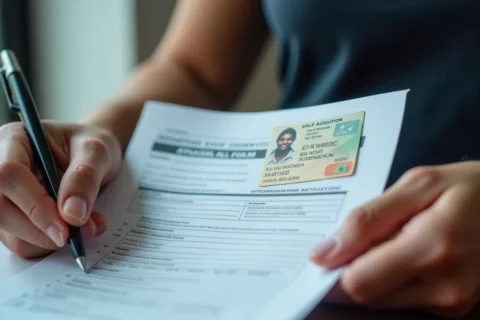
The licence number is the anchor, not the colours, the promo banner, or the polished homepage. A genuine bookmaker should show its provincial licensing details somewhere obvious, usually in the footer, the About section, or the terms. I would want to see the provincial board name, the licence number, the registered company name, and a physical address that makes sense. If those details are missing, vague, or written in a way that sounds pasted in from somewhere else, I stop there.
A licence number is also better than a brand name because the brand name can be stolen. The licence number has to match a real, regulated operator. The scammer hopes you will not check this part.
The checks I would run before I deposit
I trust a betting site after it survives a few boring checks, not because it looks tidy.
First, I look at the official domain. I want the address the bookmaker actually uses, not the one someone sent me in a group chat. If the portal lists the official web address, compare it with the site you are on. One extra character can be the whole lie.
Second, I find the provincial licence details. South African online sports betting is supposed to sit under provincial licensing, so the site should name the board that issued the licence. The point here is not the badge; it is the paper trail. If the operator says it is licensed in Gauteng, Western Cape, or KwaZulu-Natal, I want to see the board name and the number that lets me check it.
Third, I check the contact details. A real bookmaker should have usable contact information that ties back to the licensed entity. A random Gmail address, a dead phone number, or a chatbot with no human behind it is not reassuring. It is the digital equivalent of a back room with a chair and no desk.
Fourth, I look for the company name. Sometimes the marketing brand and the legal entity are not the same thing. That is normal. What is not normal is a site that hides who actually holds the licence. If the legal name is nowhere to be found, ask yourself why the operator wants the money but not the paperwork.
Finally, I compare everything against the NGB portal. If the name, domain, and licence number do not all point to the same place, I walk away. There is no prize for being brave with your deposit.
What the scammers are really after
The lure is usually the same because it works.
They promise silly odds, oversized bonuses, guaranteed wins, or some made-up inside track that ordinary punters somehow never hear about from a normal bookmaker. This is usually where the wheels come off. No legitimate operator needs to pretend it has discovered a secret way to beat maths. If a site sounds like it has found a loophole in probability, it has probably found a loophole in your judgement instead.
The damage is not theoretical. Once you pay an unlicensed operator, you can lose the lot with no real recourse. Your balance can vanish, your winnings can be ignored, and your personal information can be handled by people who have no reason to protect it. ID numbers, banking details, passwords, and phone numbers are all useful to fraudsters. So is the fact that you have already shown you are willing to click first and verify later.
There is also the broader legal problem. Legal online betting in this country depends on provincial licensing. A site operating outside that structure is outside the system that gives players any chance of complaint, mediation, or enforcement. If it goes bad, you are not dealing with a regulated bookmaker that has to answer to a board. You are dealing with a ghost that never planned to stay long enough to answer.
What I would do if a site looks off
If a betting site smells wrong, I stop using it immediately.
No more deposits. No more personal details. No more clicking through to “just check one thing”. The longer you stay, the more chances you give it to harvest something useful.
Then I go to the National Gambling Board’s verified-operators portal and search by the bookmaker’s official name, licence number, or domain. If the operator is not there, I treat that as a serious problem. A site can look polished and still be a fraud. A site can send you a neat message under a convincing logo and still be fake. The portal exists so you do not have to guess.
After that, I would report the site to the NGB and to the relevant provincial board if it is pretending to be licensed there. If any money already moved, I would get on to the bank or payment provider straight away and ask what can still be stopped or challenged. EFTs, card payments, vouchers, whatever route was used, the sooner you raise it the better your odds of limiting the damage.
I would also keep screenshots, URLs, messages, and payment references. This will not magically make the scam fair, but fraud needs a trail if anyone is going to follow it.
The habit that keeps you out of trouble
Most gamblers get caught because they recognise a site, not because they cannot read it.
That is the trap. Familiar colours make people lazy. A trusted-looking logo makes people stop checking. A forwarded link from a friend makes it feel rude to doubt it. Scammers know that. They do not need to beat your brain, only your impatience.
So I use one rule. If I cannot match the site to a real licence number, a real provincial board entry, a real domain, and real contact details, I do not deposit. Not because I am fussy, but because the internet is full of fake bookies wearing borrowed shirts, and none of them care how convincing the purple is.