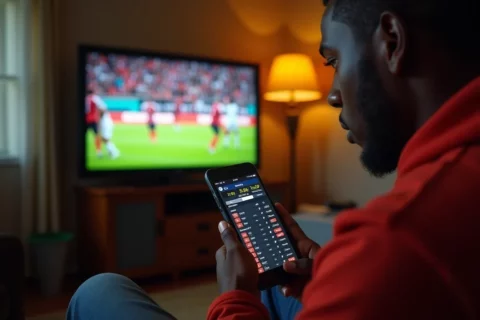
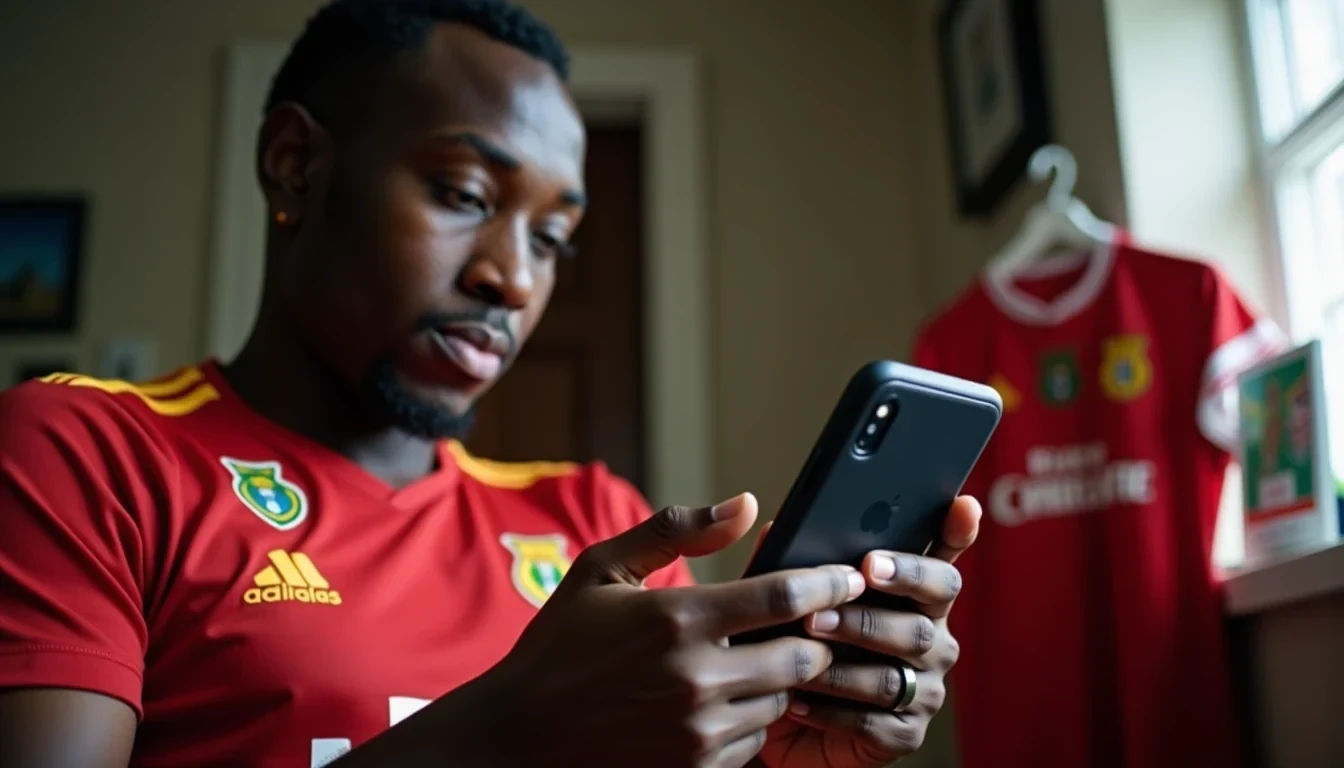
A Chiefs supporter who put R100 on every league match last season walked away R840 lighter, even though the team won twelve of those thirty games. The wins came through, but the money did not. This piece explores how backing your own club turns a price decision into something closer to wearing the jersey, and why the team collects three points while you collect a poorer return than the risk deserved.
The loyalty tax no one counts
I have watched this pattern for years, in myself and in others. The supporter arrives at the bookie or opens the app with knowledge no casual punter possesses. They know the holding midfielder is carrying a knock, that the new signing from Zambia has looked sharp in training, that the coach favours a low block against faster sides. This information is real and valuable. The problem lies in what happens next. The brain filters every uncertain signal through hope, through the memory of that cup final in 2013, through the sheer unwillingness to bet against the badge. The result is a consistent overestimation of the team’s chances, typically by ten to twenty percentage points against what the neutral market suggests. A price that looks fair to the supporter is often miserly on any cold reading.
The mechanism is not mysterious. Optimism bias means the supporter reads the same form guide as everyone else more kindly. Confirmation bias means the pre-match injury to the rival striker gets remembered, while the fact that your own fullback is suspended drifts out of mind. The availability heuristic does its work when the dramatic comeback against Pirates three seasons ago looms larger than the five flat performances that followed it. This is not stupidity; it is how human minds handle attachment. The bookmaker’s margin does not adjust for your feelings.
What a season of bad prices actually costs
Let me put numbers to this, because the abstraction hides the money. Imagine a Kaizer Chiefs supporter who bets R100 on a Chiefs win in all thirty PSL league matches. Total outlay: R3,000. The team wins twelve, draws eight, loses ten. A return of R2,160 at average odds of 1.80. The net loss is R840. The supporter who stayed loyal and watched every match ends the season poorer than the neutral who never checked a fixture.
The sharper point is that those twelve wins do not prove the bets were sound. In several of those victories, the closing market had settled at 2.10 or higher, meaning the supporter accepted a price that underestimated the true probability. The R70 profit on a R100 stake at 1.70 feels like a win, but it is not. If the objective assessment of that same match put fair value at 2.00, the supporter has paid a premium for the pleasure of backing their own. The single match result validates nothing about the wager’s quality at placement. The bookmaker does not refund your stake because the team “should have been shorter.” They pay what the ticket promised and build another overround into next week’s prices.
Compare this to a value approach on the same team. The disciplined bettor might have found only ten matches where Chiefs were priced generously, perhaps at 2.20 against a true probability closer to 1.90. Six of those ten come in. The stake is R1,000, the return R1,320, the profit R320. Fewer bets, less drama, more money. The emotional bettor has more stories to tell. The value bettor has R1,160 more in pocket at season’s end, counting the saved stakes on the twenty matches they skipped.
Why derbies are especially expensive
The loyalty tax spikes in specific fixtures. A Soweto derby or a coastal clash against AmaZulu carries emotional weight that distorts judgment further than ordinary league matches. The rivalry effect is well documented: supporters bet on their team in derbies at rates and prices they would never accept against mid-table opposition. The form guide might show their side struggling for goals, the rival goalkeeper in the form of his life, the tactical matchup favouring the opponent’s pace on the break. None of it registers. The bet is placed not as a calculation but as a declaration of allegiance. The bookmaker, who has no allegiance, widens the margin precisely because they know the money will flow regardless.
I have seen this in betting shop conversations that follow a predictable script. The supporter explains the bet with reference to history, to what this fixture means, to the need to show faith. The price is mentioned last, if at all. The closing odds, meanwhile, have drifted the other way as sharper money identifies the overreaction. The result is a market where the emotional side is consistently underpriced, not in the sense of offering value, but in the sense of offering the worst possible return for the risk assumed.
The bookmaker account is not merchandise
A category error runs through all of this. The supporter treats the betting account as an extension of fandom, like the replica jersey or the membership card. Money placed on the team is framed as solidarity, as if the collective weight of supporter wagers might somehow transmit through the ether to the pitch. The team gains no extra points. The players do not run harder because you have taken 1.70 instead of demanding 2.10. The bookmaker, who is not a fellow supporter but a business with margins to protect, collects the difference and sponsors the matchday advertising you watch while losing.
This is not an argument against betting on sport you care about. It is an argument for understanding what you are actually doing when you do it. A price is a statement about probability, not a loyalty test. The question is never “do I want my team to win?” The question is “does this price overstate or understate their chance of winning?” If you cannot answer the second question without the first one drowning it out, you are not placing a wager. You are buying an experience, and like most experiences, it costs more than it returns.
How to check yourself
The practical discipline is simple to describe and hard to maintain. Before placing any bet on your team, write down your own estimated probability of each outcome. Convert the bookmaker’s decimal odds to implied probability: 1.70 becomes 58.8%, 2.10 becomes 47.6%. If your own assessment says your team has a 50% chance and the bookie is pricing them at 58.8%, you have found poor value regardless of what happens next. Shop the price across the licensed operators — Betway, Hollywoodbets, Supabets, the others — because the discrepancies between them are often where the edge lives for the patient.
Do this before you open the app, not after you have seen the price and started talking yourself into it. The sequence matters. Once the emotional commitment forms, the maths becomes decoration. I have learned to treat bets on my own team with the suspicion I would apply to a tip from a stranger in a bar. Sometimes the value is genuinely there. More often, the familiarity that feels like advantage is actually a distorting lens, and the stranger’s cold reading of the odds is closer to right than my own.
The hard bottom line
The Chiefs supporter with their R840 loss has company. Every season, across every code, supporters fund bookmaker profits through the gap between what they hope and what the price says. The wins along the way are not evidence of skill. They are the occasional payout that keeps the loyalty tax from being noticed, the free coffee that keeps you at the machine. The true cost is in the aggregate, in the season’s worth of small overpayments that compound into real money.
Your team does not need your bet. They need your voice, your presence, your money at the gate if you can afford it. The bookmaker needs your bet, and they have built an entire architecture of prices and promotions to ensure that supporters confuse the two. The account is not merchandise. The wager is not solidarity. It is a transaction, and the only question is whether the price justifies the risk. Everything else is noise you are paying to hear.