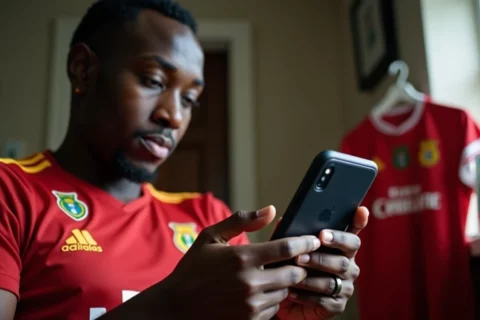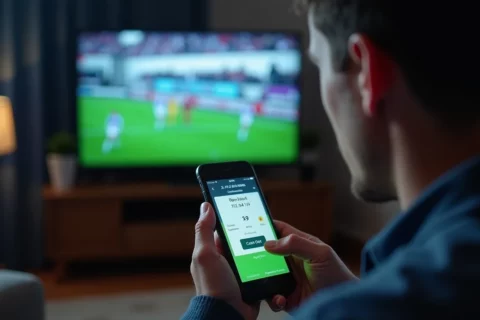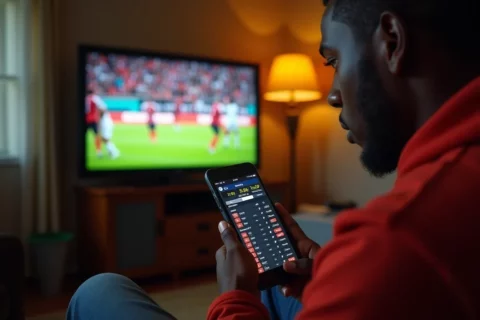
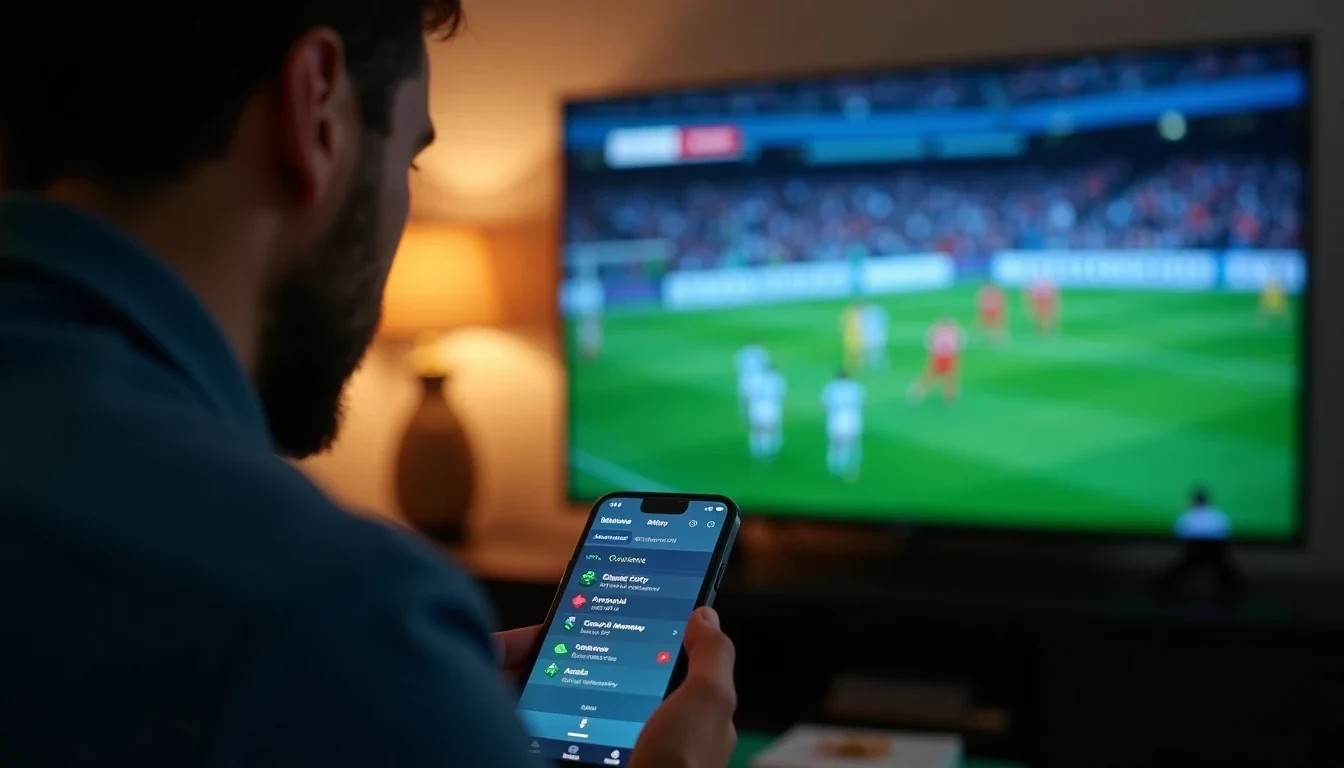
I watched the same match twice. The first time I had Hollywoodbets open on my phone. The second time the phone stayed in the kitchen drawer. Three days later I tried to recall both games, and the difference was embarrassing.
The match with the app open was Manchester City against Arsenal, a fixture I had been looking forward to for a week. I remember the notification sounds. I remember the green and red arrows flicking beside player names. I remember that at 34 minutes I had 7/1 on over 10.5 corners and that the price collapsed to 4/1 before I could confirm the stake because my Wi-Fi hiccupped for four seconds. I do not remember whether it was De Bruyne or Silva who played the pass that led to the first goal. I had to look it up. I caught the goal itself in peripheral vision while checking whether “next goalscorer” markets had reopened after a corner.
The quiet has been colonised
Football used to have dead air: a nil-nil first half, a team protecting a lead with ten minutes of sideways passing, the interval itself, once a genuine break. These were not flaws in the product. They were part of the rhythm, building and releasing tension, the space in which you noticed a tactical adjustment or simply felt the weight of a match turning.
Live betting has filled every one of these gaps with a market. Corner kicks spawn “next corner” and “total corners over/under” lines. A yellow card opens “next card” and “player to be booked” prices. A dangerous attack triggers suspended markets and fresh odds on the next goalscorer before the chance has even finished. Your original bet on the full-time result still sits there, unsettled, while you are offered six new positions on events that will resolve in the next five minutes.
The research on broadcast latency is straightforward and brutal. Your television picture runs 5 to 10 seconds behind real time. The data feeds from Opta and Sportradar that power the bookmakers’ algorithms do not. By the time you see the corner awarded on your screen, the market has already repriced. The “fresh opportunity” you believe you have spotted is a lag illusion. The bookmaker saw it before you did. His algorithm moved before your thumb did.
The experiment and what it revealed
I set this up deliberately. Same teams, same competition, different rounds. I watched the first match on a Saturday afternoon with the Hollywoodbets app active, notifications on, a float of R200 that I was prepared to lose as the cost of the experiment. I watched the second match the following weekend with the same broadcast, the same commentators, the same pre-match anticipation. The phone was not merely face-down. It was in another room.
With the app, my attention fractured into a pattern I can only describe as grazing. Every stoppage in play became a prompt to check prices. A throw-in deep in the opposition half became a moment to assess whether the “total goals” line had shifted. I was not watching Arsenal’s left-back tuck inside to create an overload. I was watching for events that would move markets.
Three days after the first match, my recall was patchwork. I remembered the score. I remembered losing R60 on a “next goalscorer” bet where the player I had backed was substituted two minutes later. I remembered the frustration of that substitution more vividly than I remembered either of the actual goals. The emotional peaks were all transactional.
After the second match, I could reconstruct sequences. I remembered the specific passage where City pressed high and forced a turnover that led to a chance. I remembered the referee’s positioning for a controversial offside call. I remembered the cadence of the commentary because I was actually listening to it instead of reading price movements. The memory was coherent in a way the first match’s was not. It had narrative shape.
What the pricing does to your eye
The bookmaker’s margin on live football typically runs 4% to 7%, similar to pre-match markets. The constant presence of that margin affects your perception. Every event on the pitch becomes potentially legible as a price. A brilliant tackle is not a brilliant tackle; it is a data point that may affect “total cards” or “next booking” or the live handicap line.
This is not a complaint about gambling itself. I gamble. I have sat in the corner shops with 20c coins and I have opened apps at 11pm on a Tuesday. The issue is the colonisation of attention, the way the apparatus inserts itself between you and the thing you ostensibly came to watch. The sport has not become more predictable. It has simply become more available for wagering, and that availability reshapes what you see when you look at it.
The social dimension erodes too. I watched the first match alone, which is how I usually watch. But I have been in lounges where multiple people have apps open, and the conversation orbits the prices rather than the play. Not “did you see that run?” but “did you get on the over?” The shared language becomes the language of the bookmaker’s interface.
The hard case against yourself
There is a temptation to frame this as the bookmakers’ fault, and they are not innocent. The interfaces are designed for speed. The notifications are engineered to interrupt. The “cash out” button pulses with exactly the colour psychology that keeps you engaged. But the harder truth is that the viewer collaborates in their own distraction. The app offers a continuous loop of apparent decision-making, and we accept the loop because it feels like skill, like participation, like being inside the game rather than outside it.
It is not skill. The information asymmetry is structural and permanent. You are betting into a market that has already moved. The “value” you believe you have found is usually a price that has already been adjusted by people with faster data and better models. The occasional win confirms the illusion. The steady margin extraction over time does not register because it is distributed across hundreds of micro-decisions, each one feeling like a fresh start.
The second match, the one without the phone, was not a moral victory. It was simply a better experience of football. I saw the game. I remember it now, weeks later, in a way I do not remember the first one. The R200 float on the first match bought me nothing except the confirmation that my attention was for sale, and that I had sold it cheap.
What remains
I still live bet. I am not claiming a conversion. But I am more deliberate about when the app is open and what I am actually watching. There are matches I care about and matches I use as background noise for wagering, and I no longer pretend these are the same activity. The latter is not football viewing. It is pricing-game participation with a football broadcast attached.
The corner shops of the eighties and nineties had a natural limit built in. You placed your bet, you received your ticket, you watched the match or you did not. The friction was part of the architecture. The app removes every friction except the friction of thought, of deciding whether this engagement is worth what it takes from you.
Football is still there, on the screen, being played by people who have trained their entire lives to do something extraordinary. The question is whether you are watching them, or watching a number change.