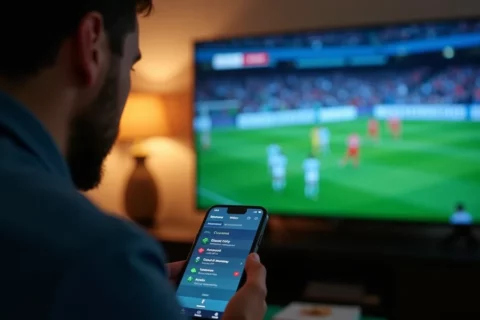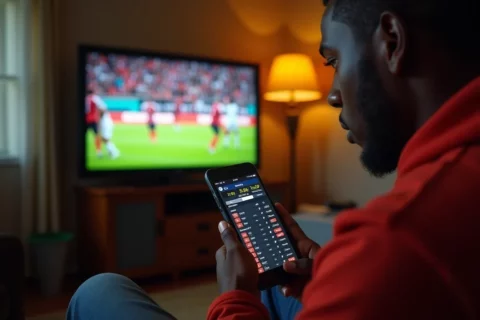
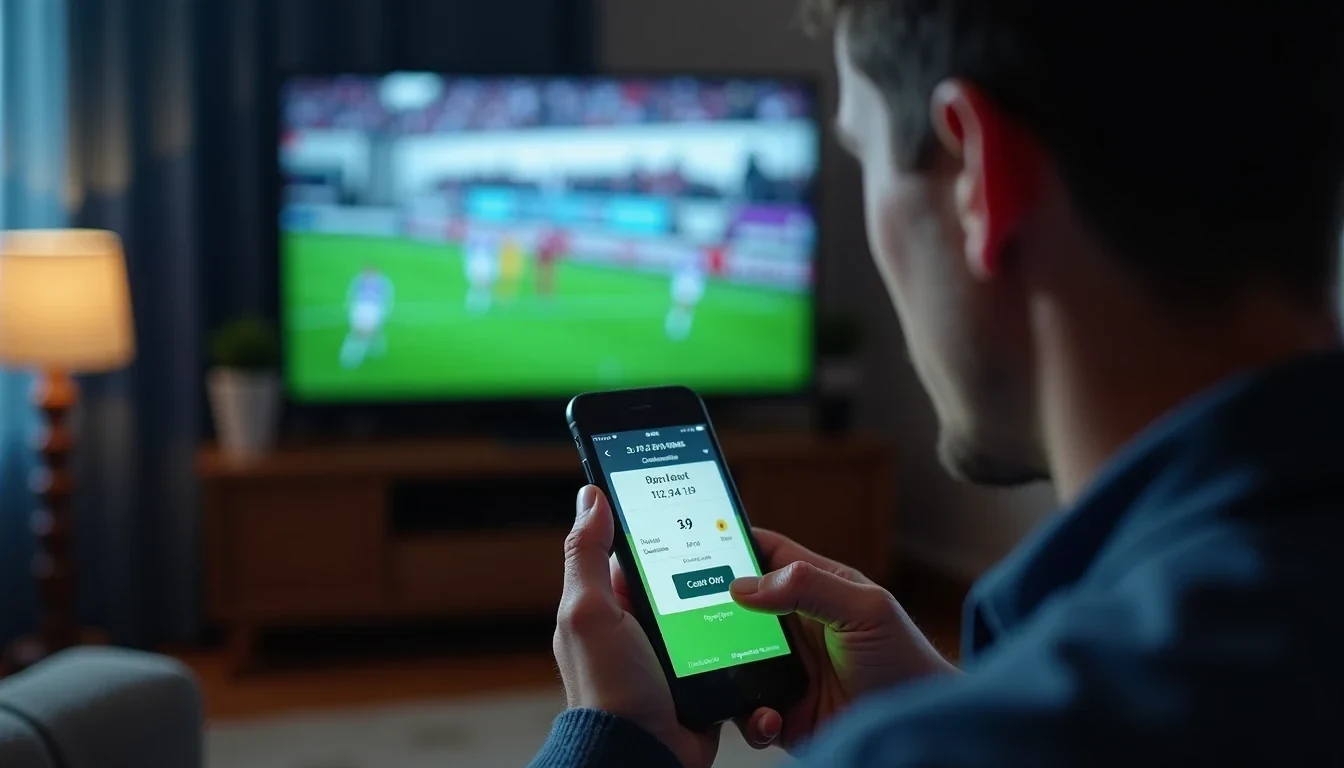
A R200 bet on Chiefs to beat Pirates at 2.80 feels finished the moment you click confirm. The money leaves your account. The slip sits in your history. You have supposedly made your decision and now the game owes you either R560 or nothing. It does not work like that anymore. The cash-out button means your bet stays alive and negotiable for ninety minutes, sometimes longer, and the bookmaker keeps ringing your pocket like a debt collector who changes his offer every five minutes.
The Match That Refuses to End
Consider a single wager and watch what happens to it.
You put R500 on Mamelodi Sundowns to win away at Cape Town City, priced at 2.20. Potential return: R1,100. The match kicks off. Sundowns score in the 23rd minute. Your cash-out offer jumps from roughly R280 to R680. The algorithm has recalculated. A 1-0 lead away from home, with over an hour to play, means the probability has shifted hard in your favour. You now face your first decision. Take R680 and surrender R420 of your potential win, or let it ride and risk watching City equalise and your offer collapse.
You hold. City come out stronger after halftime. In the 58th minute they hit the post. Your cash-out offer, which had climbed to R820 by the 50th minute, drops to R590. The near-miss registered in the live data. The algorithm smelled danger. Another decision. The offer is still above your stake, but the momentum has turned. You picture yourself explaining to your brother why you watched R820 become R0. You picture yourself explaining why you took R590 and then City never scored. You take the R590.
Or you do not. Let us say you hold, and City equalise in the 71st minute. Your cash-out offer plummets to R180, below your original stake. The bet you thought you had won is now a loser waiting to happen. The algorithm offers you R180 as risk management. It would rather pay you R180 now than risk you winning R1,100 if Sundowns find a late winner. You are no longer betting against Cape Town City. You are betting against your own regret.
This is the transformation. One wager becomes four, five, six separate decisions, each with its own emotional register. The early goal brought greed. The post brought fear. The equaliser brought something worse than fear: the sickening realisation that you had the chance to escape and you talked yourself into staying.
What the Algorithm Actually Sees
The cash-out number on your screen is not a human being trying to be fair. It is the output of a model that processes live score, time remaining, historical patterns for this league, the current odds on the exchange, and the bookmaker’s own exposure across all bets on this match. The model updates continuously. A red card to the opposition in the 65th minute with your team leading 1-0 might push your offer from 75% of potential return to 88%. An injury to your team’s striker might drop it 12% in thirty seconds.
The bookmaker builds margin into every stage of this. The original odds carried vig. The cash-out offer carries vig again, because the live odds used to generate it are themselves shaded in the house’s favour. You are being offered a price to close a position that was already priced in the house’s favour when you opened it. The double margin is not visible on your screen, but it is there in the mathematics. The algorithm knows exactly what it is doing. It knows the true probability of your bet winning at any moment, and it offers you slightly less than that, every time, because its job is to manage liability.
Cash-out became universal across licensed South African bookmakers almost overnight because they worked out that bettors who use cash-out place more bets overall, react more impulsively to live events, and accept offers that undervalue their position often enough to improve the house’s hold significantly. The feature that looks like customer service is a volume driver and a margin protector dressed in concern.
The Psychology They Are Counting On
Loss aversion is the documented tendency to feel losses roughly twice as intensely as equivalent gains. Cash-out weaponises this. When your team is leading and the offer is live, you are not calculating expected value. You are calculating how you will feel if you refuse R720 and the equaliser comes. That feeling is vivid and immediate. The feeling of leaving money on the table by cashing out early, then watching your team win comfortably, is also vivid but somehow less urgent. The algorithm knows this asymmetry and times its offers accordingly.
The pressure is real and manufactured. The countdown clock on some interfaces, the flashing button, the notification that your offer has changed are not neutral design choices. They push toward action over reflection. A bet that should have been settled in the 23rd minute when Sundowns scored is now an open wound you are invited to close at a discount.
I have watched mates cash out for R340 on a bet that would have paid R900, then spend the rest of the match arguing that they made the smart play because their team only won 2-1 and could have drawn. I have watched others refuse R600, lose everything, and swear they will never ignore the button again. Both groups keep betting. Both groups keep facing the same choice. The house does not care which mistake you make, only that the choice itself keeps you engaged and that your decisions, averaged across thousands of bettors and millions of offers, tilt slightly in their favour.
When the Exit Makes Sense
This is not a blanket condemnation. There are situations where taking the cash-out is the correct play, not emotionally but mathematically. If you bet R1,000 on a team at 3.50 and they lead 1-0 away from home but have just had their centre-back sent off and the opponent has been awarded a penalty, the live probability of your bet winning has cratered. The cash-out offer, even with its built-in margin, may still represent more than your bet’s true expected value in that moment. Taking it is not cowardice. It is recognition that the game state has changed fundamentally since you placed the wager.
The same applies to injury cascades, tactical substitutions that signal a team parking a lead they cannot hold, or weather changes that favour the trailing side. Your original bet was priced on one set of assumptions. If those assumptions are violated, the cash-out becomes a way to update your position. Most bettors do not analyse the game state with anything like this rigour. They react to the offer itself, to the number on the screen and the fear it produces.
The smart use of cash-out requires you to separate what you know about the match from what the offer is making you feel. This is difficult when the offer is changing every thirty seconds and your phone is buzzing in your hand.
The Bet Behind the Bet
Cash-out adds a second wager to your first. Your original bet was on Sundowns to win. Your cash-out decision is a bet on whether the current offer overvalues or undervalues their chances from this point. You are now playing market maker against an algorithm with more data, faster processing, and a built-in edge. This is not a game most recreational bettors are equipped to win.
The bookmaker presents cash-out as flexibility, control, and a favour to the nervous punter. It is none of these. It is a new product with its own margin structure, its own psychological hooks, and its own contribution to the house’s profitability. Every time you accept an offer, you are not settling a debt. You are entering a new transaction where the terms are set by the other party, where the price is shaded against you, and where the pressure to decide quickly is deliberately intensified.
The corner betting shops I grew up around had none of this. You handed over your R2, you got a paper slip, and the result was the result. There was no negotiation, no second-guessing, no algorithm whispering in your ear at halftime. The modern bettor has more information, more options, and more ways to turn a single decision into a sequence of agitated choices that, in aggregate, bleed value back to the house. The cash-out button is not your friend. It is another table in the same casino, with the same edge, dressed up to look like the exit.