
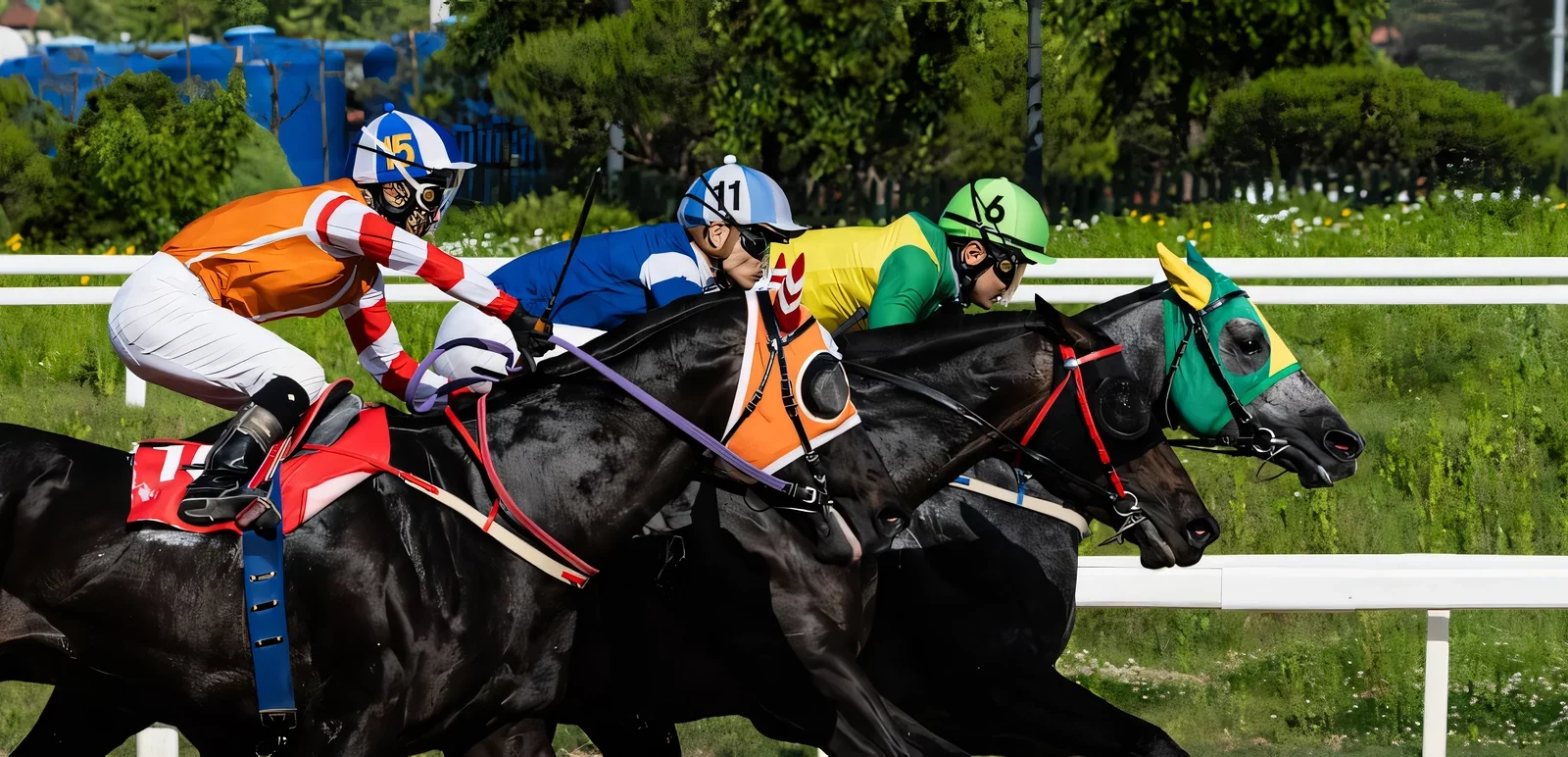
A punter who puts R100 on a horse at 5/1 with a fixed-odds bookmaker knows exactly what walks back if that horse wins: R600 total, R500 profit, locked in the moment the bet is accepted. The same punter putting R100 into the tote on the identical horse has nothing locked in at all. They hold a ticket that might pay R800, R400, or R220, depending on how many other people made the same choice and how much money sat in the pool. The horse and the result do not change. Only the mechanism of the bet determines whether the winner collects a predictable sum or a surprise.
How Fixed Odds Lock in Your Price
Fixed-odds betting is a contract. The bookmaker offers a price, you accept it, and the deal is done. Hollywoodbets, Betway SA, and any provincially licensed bookmaker operating under the National Gambling Act 7 of 2004 are all bound by the same structure. The odds reflect their assessment of probability, their need to balance liability across the field, and the margin they intend to keep. Once your stake leaves your account, your payout is set in stone.
The maths is straightforward. A R100 bet at 5/1 returns your stake plus five times your stake in profit: R600. A R100 bet at 7/2 returns R450. The bookmaker carries the risk. If the public piles onto one horse and it wins, the bookmaker pays out at the agreed odds regardless of how lopsided their book became. They adjust live odds to attract money onto other runners, trying to hedge themselves, but your price does not move. The only routine disruption is Rule 4 (c), the deduction applied when a horse withdraws after your bet is placed. The odds of the withdrawn horse determine the percentage knocked off your return, reflecting that the remaining field now has better chances than when you bet.
This certainty draws punters to fixed odds. You can calculate your position before the race runs. You know whether a win covers earlier losses, funds a weekend, or merely softens a blow. There is no post-race arithmetic involving pools and ticket counts.
How the Tote Assembles Your Dividend
Totalisator betting works on pari-mutuel principles. Every rand wagered on a specific bet type for a specific race enters a common pool. The Totalisator Agency Board, TAB, operates this system in South Africa. After the race, a predetermined percentage comes off the top, the take-out rate covering operator commission, operational costs, and government taxes. What remains is the distributable pool, split among all winning tickets.
The critical difference is timing. With fixed odds, the price exists before the race. With the tote, the dividend only exists after. The final payout per unit stake depends on two variables you cannot fully know when you bet: the total pool size and the number of winning tickets.
Consider a Greyville race with a R10,000 pool remaining after deductions. If 1,000 winning R1 tickets exist, each pays R10. If only 500 winning R1 tickets exist, each pays R20. Your return is not determined by any bookmaker’s assessment of the horse’s merit. It is determined by how wrong or right the collective betting public was about that merit. A heavily backed favourite that wins will produce a skinny dividend because the pool divides many ways. An overlooked horse that wins will produce a fat dividend because few tickets share the spoils.
You are not betting against a bookmaker’s price. You are betting into a pool that constructs its own price from everyone’s collective money.
A Hypothetical Head-to-Head at Greyville
Take a horse called Zulu Warrior running at Greyville. Two punters, each with R100 to stake. Punter A takes fixed odds of 4/1 with a licensed bookmaker. Punter B puts the same R100 into the tote win pool.
Zulu Warrior wins.
Punter A collects R500: R400 profit plus the original stake, exactly as contracted. The only variation would be a Rule 4 (c) deduction if a horse withdrew after the bet, but assume a clean race.
Punter B’s outcome depends on the tote arithmetic. Suppose the win pool reached R50,000 gross, the take-out rate was 20%, leaving R40,000 distributable. If Zulu Warrior was popular and attracted 2,000 winning R1 tickets, the dividend is R20 per unit. Punter B’s R100 stake returns R2,000. If Zulu Warrior was unpopular and only 500 winning R1 tickets existed, the dividend is R80 per unit, returning R8,000. If Zulu Warrior was the obvious choice and 4,000 winning R1 tickets existed, the dividend drops to R10 per unit, returning R1,000.
Same horse. Same result. Three possible tote outcomes against one fixed certainty. In this constructed example, the popular-horse scenario pays worse than fixed odds, the unpopular-horse scenario pays dramatically better, and the moderate scenario sits between. The tote punter does not know which they will get. The fixed-odds punter knows precisely.
This is not a design flaw in either system. It is a fundamental difference in what each bet represents. Fixed odds are a private contract at a stated price. The tote is a collective wager where your return is a share of what everyone else put in, adjusted for how many others chose correctly.
Reading the Pool in the Old Betting Shops
Before online platforms displayed tote dividends with a refresh, betting shops had boards or screens showing estimated dividends that fluctuated as money entered the pool. Watching those numbers move was functional information.
A punter standing in a shop in Durban or Johannesburg could see the estimated win dividend on a horse shrink as the race approached, meaning money was flowing onto it. A shrinking dividend meant more winning tickets to share the pool, meaning less per ticket if the horse came in. Conversely, a dividend that held steady or grew relative to the pool size suggested the public was ignoring a horse despite its chances.
This observation shaped strategy. Some punters chased value in overlooked horses, hoping for a fat dividend. Others accepted skinny returns on obvious favourites, treating the tote like a low-yield savings account with a racing theme. The fluctuations were the market speaking, not a bookmaker’s opinion but the aggregated money of every punter in every linked shop and every off-course outlet.
The old practice of pool-watching also revealed something about crowd behaviour. The public overbacks certain types: last-start winners, horses with familiar names, anything the tipsters pushed. A punter who could read the board and resist the herd sometimes found dividends that no fixed-odds bookmaker would offer on the same horse. The reverse was equally true. A horse the crowd ignored, for sound form reasons, might offer a fixed-odds price that was generous compared to its real chance, while the tote would pay handsomely if it somehow won.
Which System Suits What Kind of Punter
The choice between fixed odds and the tote is not about which is fairer. Both are fair within their own logic. It is about what a punter values.
Fixed odds suit those who want certainty, who budget around known returns, who see a price they believe overstates a horse’s chance and want to lock it in before the market corrects. The bookmaker’s margin is visible in the odds, and the punter either accepts it or walks away.
The tote suits those who believe they read the crowd better than the crowd reads the race, who think a horse is undervalued by the betting public and will therefore produce a dividend larger than any fixed price available. It also suits those who simply enjoy the communal aspect, the sense that everyone is in the same pool, the same uncertainty, waiting for the same final number.
Neither system changes the underlying difficulty of picking winners. The horse still has to run, the jockey still has to ride, the interference still has to miss. What changes is the mathematics of your reward when you are right, and whether you knew that mathematics in advance or discovered it only after the fact.
The punter who understands both mechanisms can choose deliberately rather than defaulting to whatever platform they opened first. That is the only edge available without inside information: knowing what you are actually doing when you place the bet.