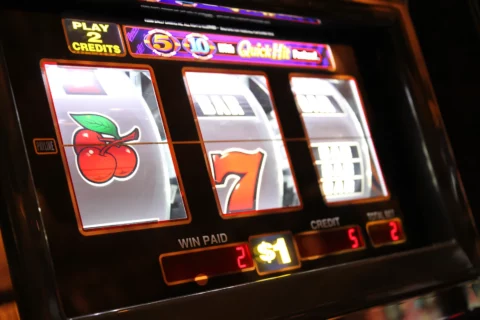

RTP is the number gamblers love to abuse, usually right after a losing run. A slot with a 97% return does not mean it is quietly holding back R97 of every R100 for you personally. It means that across a very large body of play, the maths tends to land near that figure. Your Friday night can still go straight into the bin.
I think of it as a bag of spins. The published RTP is the average of the whole bag, not a promise about the handful you pull out before the waiter drops the bill and your patience goes with it. A short session can draw a generous stretch, a dead stretch, or the kind of stretch that makes a grown person stare at the screen like it insulted their family.
What RTP actually measures
The number behind the number
The National Gambling Board’s definition is plain enough once you strip away the regulator-speak. RTP is the total returned to players divided by the total wagered, measured over a large run of play. Not one night. Not one person. Not one machine sulking in the corner of a casino floor because you arrived with a budget and confidence.
This distinction is the whole game. A 96% RTP game means that, over a huge sample, about R96 comes back for every R100 staked. The missing R4 is the house edge. It is the casino’s built-in share of the action, expressed in the cleanest language maths has.
I’ve seen plenty of players hear a number like 96% and translate it into something personal, as if the machine has made a contract with them. It has not. RTP describes the structure of the game, not your relationship with it. The machine does not know your name, does not care that you had a rough week, and does not keep a little ledger marked “owe this oke back.”
The bag of spins is the right picture
The bag of spins idea works because it forces you to think in samples. Imagine a massive bag full of thousands or millions of possible spins. Some are wins, some are losses, some are the awkward middle ground where your balance drifts down one boring rand at a time. RTP is the average across the whole bag after all those outcomes have been counted.
Your session is nowhere near that big. A hundred spins at R1 a spin is a tiny scoop. A thousand spins is still small. Even a decent-sized night out is nothing compared with the volume of play needed for the published return to show itself properly. Two people can play the same machine on the same evening and walk away with wildly different stories, both of them technically true.
One player can run hot, hit a bonus, and leave feeling like the room is tilted in his favour. The next can feed the machine the same stake and get back a handful of scraps. Neither one has discovered the “real” RTP in any meaningful sense. They have just sampled a tiny patch of a much bigger statistical field.
Why a high number can still wipe you out
Short sessions are tiny samples
A high RTP does not protect a finite budget. People dislike this because it ruins the fantasy that a good percentage should behave like a partial refund. It does not. A slot can have a healthy long-run return and still strip an entire session down to zero before you have even settled into the chair.
Take a simple example. Suppose you walk in with R100 and play 100 spins at R1 each. A game with a 96% RTP does not mean you should expect R96 back by the time you stop. You might get R20 back. You might get R150. You might get nothing worth bragging about and plenty worth regretting. The published figure only starts to make sense when millions of spins are pooled together, not when one player is chasing a mood swing.
This is where gamblers get themselves in knots. They see a machine that has not paid for a while and decide it is “due”. The reels do not work like a geyser that has to burst after enough tapping. Each spin is its own event. The machine has no memory in the emotional sense we like to pretend it has. It is not offended by your loyalty card.
Variance does the heavy lifting
A game can post a decent RTP and still be viciously volatile. In plain terms, the return is spread unevenly. Some games lean on small, regular hits. Others hold most of their value in rare, chunky payouts that you may never see in a short stretch. The long-run percentage can look healthy while the live experience feels like a grinder with a grudge.
The same RTP can wear two very different faces. A 96% game with low volatility may chip away more gently. A 96% game with high volatility can sit there for long periods looking dead, then throw out one sizeable win somewhere in the system and make the maths look tidy in the distance. The player on the floor does not live in the distance. He lives in the session, and sessions are messy.
Most land-based slots I’ve seen sit somewhere in the 88% to 98% range, depending on the game and the operator. This spread is not decorative. An 88% game keeps a much bigger slice than a 96% one over time. Put bluntly, if I can choose between those two, I know which structure is kinder to the player. I also know that kinder does not mean kind.
How I use RTP when I pick a game
Compare the structure, not the fantasy
RTP is useful when I want to compare one slot with another. This is the proper job of the number. It tells me which game is built to return a larger share of wagers over the long haul, and which one is built to keep more for the house. If one game sits at 94% and another at 97%, I do not need a motivational speech to know the 97% structure is the better one for a player.
What I do not do is use RTP as a fake balance sheet for a single session. It is not a calculator for what a machine “owes” me before I walk away. That line of thinking is how people turn a statistical average into a personal grievance. The slot is not behind on rent. It is just running the numbers it was designed to run.
If a casino or a game info screen publishes the RTP, I read it as a clue about the architecture. It helps me decide whether I am looking at a stingy machine, a looser one, or one that hides its appetite behind dramatic swings. It does not tell me whether tonight will be my night, because that kind of certainty belongs to marketing copy and superstition, both of which are excellent at wasting money.
The number is not a debt ledger
Gamblers hate hearing this because it knocks the romance out of the machine. A slot does not build up debt to a player. It does not track whether you have had three dead sessions in a row and are therefore “owed” a lift. It simply produces outcomes inside a fixed statistical design, and the design is tilted in the house’s favour from the start.
So when I hear someone talk about RTP as if it were a promise, I hear a misunderstanding dressed up as confidence. The game is not promising a session return. It is advertising its long-run structure. That is a much colder, much more useful thing. It tells you what sort of machine you are dealing with. It does not tell you how your next hour will go, because no honest number can do that.
RTP is the average of the whole bag, not the story of your draw. The machine owes you nothing but the next spin, and that is exactly why people keep mistaking it for a debt they can collect.