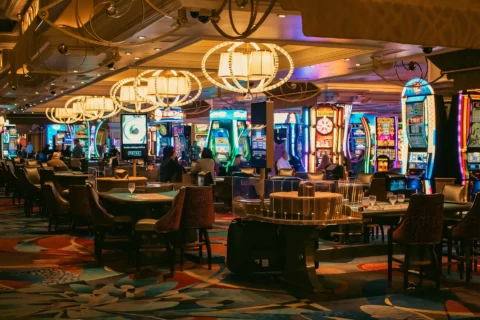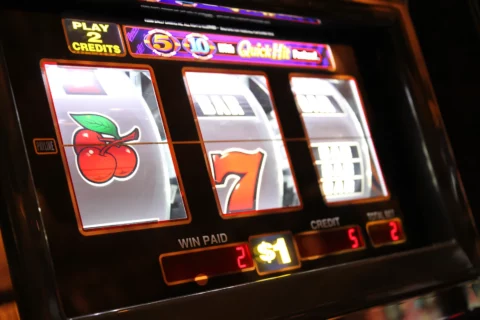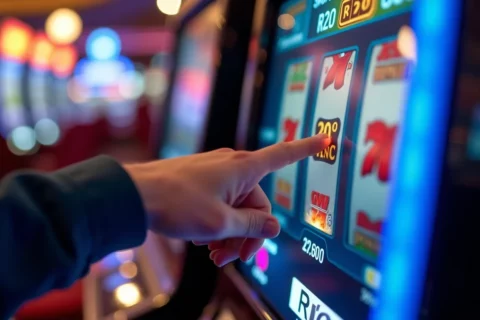
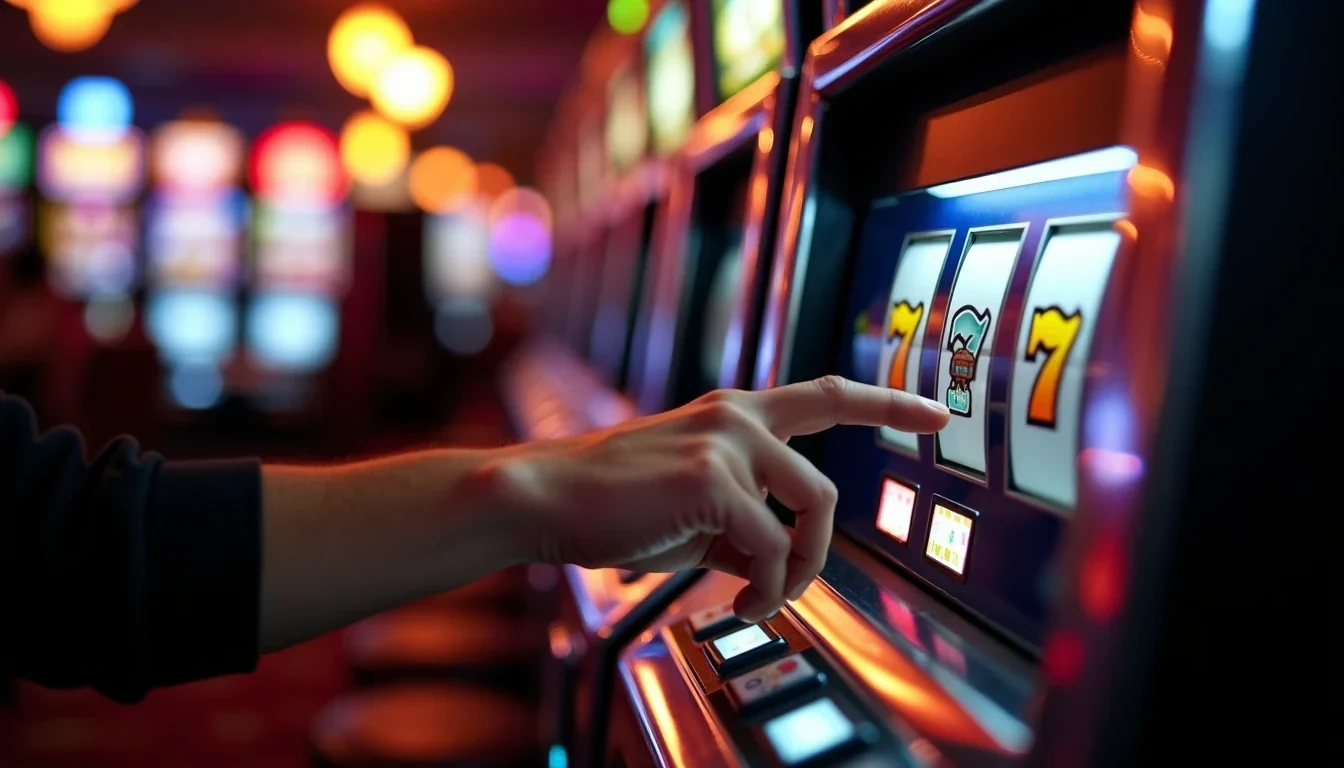
Two jackpot symbols stare back at you, and the third sits one row below the line like it got stuck in traffic. Your heart jumps. Your hand moves toward the spin button before your brain has finished processing what happened. This is not luck teasing you; it is a design choice, tested and approved, doing exactly what it was built to do.
Why Your Brain Calls It “Close”
The human mind did not evolve for slot machines. It evolved for tracking prey across savannahs, for reading weather patterns, for knowing that three near-misses with a spear meant the fourth throw might land. Pattern recognition kept us alive. Casinos simply repurposed it.
When two matching high-value symbols land on the payline and the third appears adjacent, your brain’s reward circuitry fires in patterns that look, on a scanner, remarkably similar to an actual win. The ventral striatum and insula light up. Dopamine releases. You feel the same anticipation, the same surge of possibility, that accompanies real success. The machine has triggered a reward prediction error: your brain expected nothing, got something that resembled victory, and now it wants to chase that feeling again.
This is not weakness on your part; it is biology meeting engineering. The near miss exploits what psychologists call salience bias: unusual outcomes stick in memory far better than routine ones. You will forget two hundred blank spins by tomorrow. You will remember that cherry sitting just below the line for months. The memory feels like data, but it is not. It is a selected highlight reel, curated by a machine that knows exactly how to make losses taste like progress.
The Programming Behind the Tease
Modern slots do not run on mechanical reels with fixed symbol counts. They run on virtual reels: software constructs that can be hundreds of symbols long, mapped to display positions through algorithms approved by regulators like the National Gambling Board. This mapping creates the illusion.
A jackpot symbol might appear once every fifty stops on the virtual reel for the payline itself. However, on the stops immediately above and below that line, the same symbol might appear once every eight stops. The Random Number Generator has already determined your loss before the reels begin their animated descent. The display logic then selects the most emotionally compelling way to show you that loss. Two sevens and a third seven one position off is not random chance being cruel; it is a presentation layer doing its job.
International Game Technology held patents going back decades on exactly this kind of “stop display” mechanism: methods for arranging virtual symbols so that winning combinations cluster near the payline with mathematical precision. The technology has only grown more sophisticated. Today’s video slots can layer near-miss events with customized sound effects, vibration patterns on mobile devices, and celebratory animations that would be excessive for a modest actual win. The loss gets dressed in victory’s clothes.
The Independence Your Gut Rejects
Every gambler knows rationally and forgets operationally that the machine has no memory. The RNG generates thousands of numbers per second, and the one it locks on when you press spin determines that spin alone. The previous result, whether a blank, a small win, or that agonizing near miss, has been mathematically erased. The probability resets to exactly where it stood.
Your brain rebels against this. The gambler’s fallacy whispers that you are “due.” Confirmation bias collects those near misses like evidence in a case you are building against randomness itself. Cognitive dissonance resolves the uncomfortable gap between feeling and fact by reframing the loss as proximity: not a failure, but a prelude. The machine does not need you to believe this consciously; it only needs the feeling to persist long enough for your finger to press again.
The mathematics are brutal and simple. A near miss pays zero. It moves the RTP percentage not one decimal point. The house edge, whether 6% or 15% depending on the machine and jurisdiction, continues its steady work unaffected by your emotional weather. What felt like momentum was a static image, a single frame with no sequel guaranteed.
What This Means on the Floor
I have watched players at GrandWest and at the smaller licensed venues in Durban and Pretoria chase near misses with escalating bets, convinced the machine is “warming up.” I have done it myself, though I would prefer to claim otherwise. The behavior is predictable enough that machine designers can model it: persistence increases measurably after near-miss events compared to after straightforward losses. Players stay longer. They return sooner. They remember the machine’s name.
The danger lies not in any single spin but in the narrative that near misses construct. A session of play becomes a story with rising action, with “almosts” that feel like plot development rather than what they are: identical statistical failures wearing different costumes. The intermittent reinforcement schedule, unpredictable and emotionally loaded, is the same psychological mechanism that makes any variable reward system so difficult to walk away from.
South African regulations require that RNGs and virtual reel mappings be submitted for approval, and that RTP percentages be disclosed and adhered to. These protections ensure fairness in a narrow technical sense: the machine will pay out its programmed percentage over millions of spins. They do not protect you from the design choices that make losing feel like almost-winning, which transform statistical stasis into personal drama.
The Honest Spin
There is no momentum on a slot machine. There is no “getting closer.” The third symbol below the payline is not a promise deferred; it is a loss displayed with maximum psychological efficiency. The excitement you feel is real. The chemistry is real. But the meaning your brain assigns, the story of progress and impending breakthrough, is a translation error between ancient neural circuitry and modern software.
The next time two jackpot symbols land and the third teases from the edge, notice what is happening. Your body is responding to a crafted experience, not to fortune’s knock. The spin button waits. The RNG already holds your next result, indifferent to what came before. You can press it or not, but do it knowing that “almost” on a slot machine is not a measure of distance traveled. It is a destination in itself, one the house reached long before you sat down.