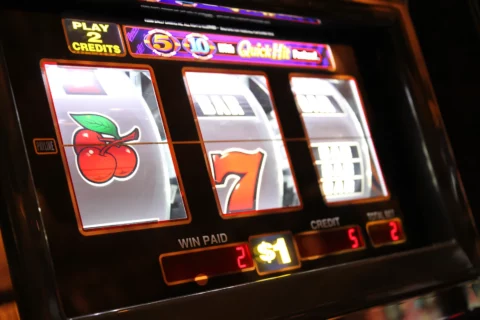

Two slot machines sit side by side on the casino floor, both flashing 96% RTP in their help menus. One will chew through R500 in twenty minutes, leaving you staring at an empty balance and wondering if the thing is even plugged in. The other might let you stretch that same R500 across two hours of small hits, with free spins triggering often enough that you forget to check your phone. The jackpot art on both is equally loud, but the math underneath them is not even close.
RTP Tells You the House Edge, Not Your Evening
Return to Player is a lifetime average, reflecting millions of spins, not your session. That 96% means the machine keeps R4 of every R100 wagered across its entire existence. It says nothing about whether you will see R96 back from your R200 tonight. You might see R180, or you might see zero. The percentage is real but it is not a promise, and treating it like one confuses players and leaves them broke.
Volatility shapes your actual experience. It measures how unevenly that 96% gets distributed. A low-volatility game pays small amounts frequently, keeping your balance wobbling along. A high-volatility game hoards its payouts, dumping them rarely and in chunks that can be substantial. The RTP is the same, but the ride is entirely different. The house edge does not change, but your chances of still being seated when something interesting happens absolutely do.
What High Volatility Actually Feels Like
I have watched people feed a high-volatility machine for forty minutes without a single feature trigger. The base game pays nothing. The reels spin, the sounds play, the balance ticks down. It starts to feel broken. Then someone three machines over hits a bonus round and the screen explodes with multipliers, and suddenly that same machine looks like the only one worth playing. That is the trap.
Games like Dead or Alive 2 or Book of Dead are built this way deliberately. The paytable shows enormous top prizes, the bonus rounds carry wild multipliers that can stack into thousands of times your stake, and the base game is deliberately stingy to fund those moments. You are not experiencing a malfunction during the dry spells; you are experiencing the design. The machine is working exactly as intended, but your wallet may not be built for it.
Pragmatic Play labels some of their slots with a volatility meter, using five lightning bolts for the most brutal. NetEnt uses similar ratings in their info panels. These are not decoration; they are the developer warning you what you are walking into.
The Budget Reality Nobody Wants to Hear
A R100 session budget on a high-volatility slot is not a strategy. It is a lottery ticket with better sound effects. You might trigger a feature on spin three and walk away with R800. More likely, you will burn through twenty or thirty spins at R2.50 each, hit nothing, and be done before you have even settled into your chair. The machine was not “due.” Your bankroll simply could not survive the variance long enough to reach the parts of the distribution that pay.
Low-volatility games are built for the R100 night. Starburst, Esqueleto Explosivo, anything where three-of-a-kind combinations land regularly and free spins trigger without requiring a pilgrimage through the desert. You will not retire on the wins. You might collect R12 here, R8 there, occasionally R40 on a decent line hit. The balance dips and recovers, and the session lasts. For a lot of players, that is the actual goal, even if they will not admit it until they have blown a month’s entertainment budget in twelve minutes on something flashier.
The math is straightforward. If your effective cost per spin on a high-volatility game includes the dry spells you must survive to reach the features, then the real price of admission is higher than the minimum bet suggests. A R2.50 spin on a brutal game might require a R1,000 bankroll to have reasonable odds of seeing what the machine can actually do. This is not the casino being greedy; it is the mathematics of uneven distribution.
The “Due” Fallacy and Why It Persists
Every gambler I know has stood up from a cold machine, watched someone else sit down and win, and felt the stab of certainty that they were cheated out of a payout that was rightfully theirs. The machine was due. They had warmed it up. The next player collected their harvest.
This is nonsense, and we all know it is nonsense, and we all feel it anyway.
South African land-based slots, like every properly regulated machine in the country, run on audited Random Number Generators certified under provincial licensing authorities and the National Gambling Act 7 of 2004. The RNG does not know you exist. It does not track your losses. It does not enter a compensatory mode after a dry spell. It generates thousands of numbers per second, and the one active when you press spin determines your outcome. The probability of hitting the jackpot on your next spin is identical whether you have just won it or lost five hundred consecutive times.
What we interpret as “due” is simply volatility manifesting. A high-volatility game goes cold because that is what high-volatility games do. Then it pays because that is also what they do. The timing is not a reward for patience. It is not punishment for the previous player who ran out of money one spin too early. It is randomness with a particular shape, and our pattern-seeking brains refuse to accept that shape as meaningless.
How to Read a Machine Before You Commit
You do not need to learn the mathematics of variance to protect yourself. You need to spend ninety seconds in the information panel.
First, check if the developer states volatility explicitly. Pragmatic Play’s lightning bolt scale, NetEnt’s text ratings, Play’n GO’s labels. Regulators and informed players demanded transparency, so these exist. Use them.
If the game is coy about its volatility, read the paytable. A top prize of 10,000 times your line bet with almost nothing in the middle ranges is a screaming red flag, indicating high volatility. Conversely, a paytable crowded with small and medium payouts, where five-of-a-kind and three-of-a-kind are not dramatically far apart, suggests a gentler game.
Bonus structure tells the same story. Free spins with escalating multipliers, sticky wilds, expanding reels, progressive jackpots. These features are expensive to fund, and base-game starvation funds them. Simple bonus rounds, frequent but modest free spins, straightforward mechanics keep you alive longer.
Finally, play the demo. Every reputable online casino offers this, and there is no excuse for skipping it. Two hundred spins in demo mode will show you what the rhythm feels like: whether features trigger often enough to maintain interest, and whether your simulated balance flatlines or fluctuates. The experience is not identical to real money play psychologically, but the mathematics are the same. You can learn the shape of the game without paying tuition.
The Art Is a Lie, and That Is Fine
The jackpot graphics are doing their job. They are designed to attract your eye, trigger anticipation, and keep you seated through the dead spins because the possibility of that visual payoff feels tangible. There is no shame in enjoying the theatre. I like a good bonus animation as much as anyone.
But the art is not the game. Two machines with identical RTPs and different volatilities will show you the same promotional imagery while treating your bankroll utterly differently. Your job as a player is to look past the surface and match the machine’s mathematical personality to your actual circumstances. How much money do you have? How long do you want to play? What kind of emotional experience are you actually seeking, as opposed to what the poster on the machine says you should want?
A R200 budget and a high-volatility progressive are a mismatch. This is not a moral failing or bad luck waiting to happen; it is just a mismatch. It is like bringing a cricket bat to a rugby match. The tool is not wrong; the context is.
Choose accordingly. The numbers are all there if you bother to look.