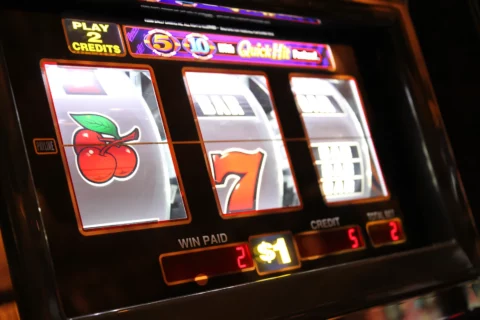

A 20c slot looks cheap until the machine eats five credits a line across twenty lines and sends R20 out of your balance before you have time to blink. This is a neat trick. The cabinet gives you a comforting denomination, then quietly turns the real wager into something bigger, messier, and easier to ignore.
Old coin machines were cruder, but they were honest. You fed them coins, heard the clatter, watched the tray, and knew exactly what had gone in. Modern slots have replaced that bluntness with credits, lines, multipliers, and menus that look tame while the meter underneath is doing the damage.
The number on the cabinet is not the number you are paying
The first lie in slot play is usually visual. A machine can shout 20c from the screen or the button panel and still charge far more than twenty cents for a spin. The 20c is only the denomination, the base unit the game uses to calculate a credit. It is not the amount that leaves your account when you hit spin.
What gets deducted is the total stake. This figure determines whether you keep playing. The maths is simple even if the interface is built to feel less simple. Multiply the denomination by the number of credits per line, then multiply that by the number of active lines. If you are on a 20c game, betting 5 credits on 20 lines, you are already at R20 a spin.
Twenty cents sounds harmless when it is sitting alone on the screen. Twenty cents used twenty times is not a bargain; it is a full-scale spend dressed up as pocket change.
Old machines made the loss obvious
Older coin boxes did not need psychology. They had a mechanical honesty that modern machines have spent years working around. You put money in, you heard it hit metal, and you could see the tray empty. There was no pretending that your stake was smaller than it was.
Most of those machines were simple. One payline, maybe three if the cabinet was feeling adventurous, and not much else to configure. You did not have to juggle credits per line or wonder whether some bonus feature was quietly inflating the bet. One spin cost a calculable amount, usually close to the coins you had just fed it.
That bluntness had a downside. The machine did not explain itself. But at least the money was visible. You could count the coins in your hand and know what you were giving away. That was the whole bargain.
Modern slots hide the spend in layers
The modern cabinet is better at making small bets look small. A low denomination lets the game appear cheap, while the actual spend is split across lines and credits in a way that keeps the rand figure from staring you in the face.
A machine with 20, 50, 100, or even more ways to win does not do that for your entertainment only. Every active line adds to the wager. If you turn on twenty lines, you are no longer placing one neat little bet; you are placing twenty of them at once. If you raise the credits per line, the cost climbs again.
Then come the extras. Some games let you buy a feature, turn on a bonus bet, or accept a multiplier that changes the amount staked before the reels even settle. Autoplay is another favorite because it lets the machine keep taking the same amount over and over while your attention is somewhere else. It is efficient, which makes it dangerous.
The player sees a cheap denomination, then makes a series of small-seeming choices that add up to a much larger deduction. This is the whole racket. Nobody is being robbed at knifepoint. The machine just makes sure the full number is hard to notice.
The display is legal and still misleading
South African land-based machines do not operate in a free-for-all. The National Gambling Act 7 of 2004 sets the framework, the National Gambling Board has the national oversight role, and the provincial gambling boards handle licensing and enforcement in their own provinces. That includes technical standards for the machines themselves.
Licensed casinos and other legal land-based venues are supposed to show the important stake information. The denomination, the number of lines, the credits per line, and the total amount being wagered should all be available on the machine. The law wants transparency. The gap is in how readable that transparency feels when you are standing in front of the cabinet.
Operators get room to breathe in that gap. If the total bet is there but buried under a brighter credit readout, a bigger spin button, and a few flashing prompts for features, most players will fixate on the number that flatters them. Twenty cents feels manageable. R20 a spin feels like a different conversation. The machine knows this, which is why it leads with the smaller number.
The psychology is doing half the work
Slot design has never been just about reels. It is about making the spend feel less like spend. Credits are useful for that because they create distance between the cash in your pocket and the amount being removed from play. Once the machine is speaking in credits instead of rand, your brain has to convert the figure before it can feel painful.
That delay is enough. If you are playing quickly, the conversion never quite happens. You see 20c. You see 5 credits. You see 20 lines. Your brain says “small” because each part looks tolerable on its own. The machine has already combined them into a larger bet.
Many people leave a slot banked to a denomination and still walk away annoyed at how fast the money went. They were not wrong about the 20c. They were wrong about what the 20c actually meant in practice.
The total stake is the only number worth watching
If I am playing slots, I do not care what the smallest label on the cabinet says until I know what one full spin costs. That figure controls the damage. Everything else is decoration, and often very expensive decoration.
A 20c machine is not a cheap machine if it is set to 10 lines, 5 credits, or some bonus buy that pushes the stake up again. It is the same old story in a fancier jacket. The game looks like it is nibbling at your balance, then you notice it has been taking proper bites the whole time.
I trust the rand figure and ignore the sweet little denomination unless it comes with a full cost readout that is impossible to miss. If the machine wants to be honest, it can put the total bet where a tired player will actually see it. If it buries that number, I assume the machine is trying to make me feel clever while it empties my account.