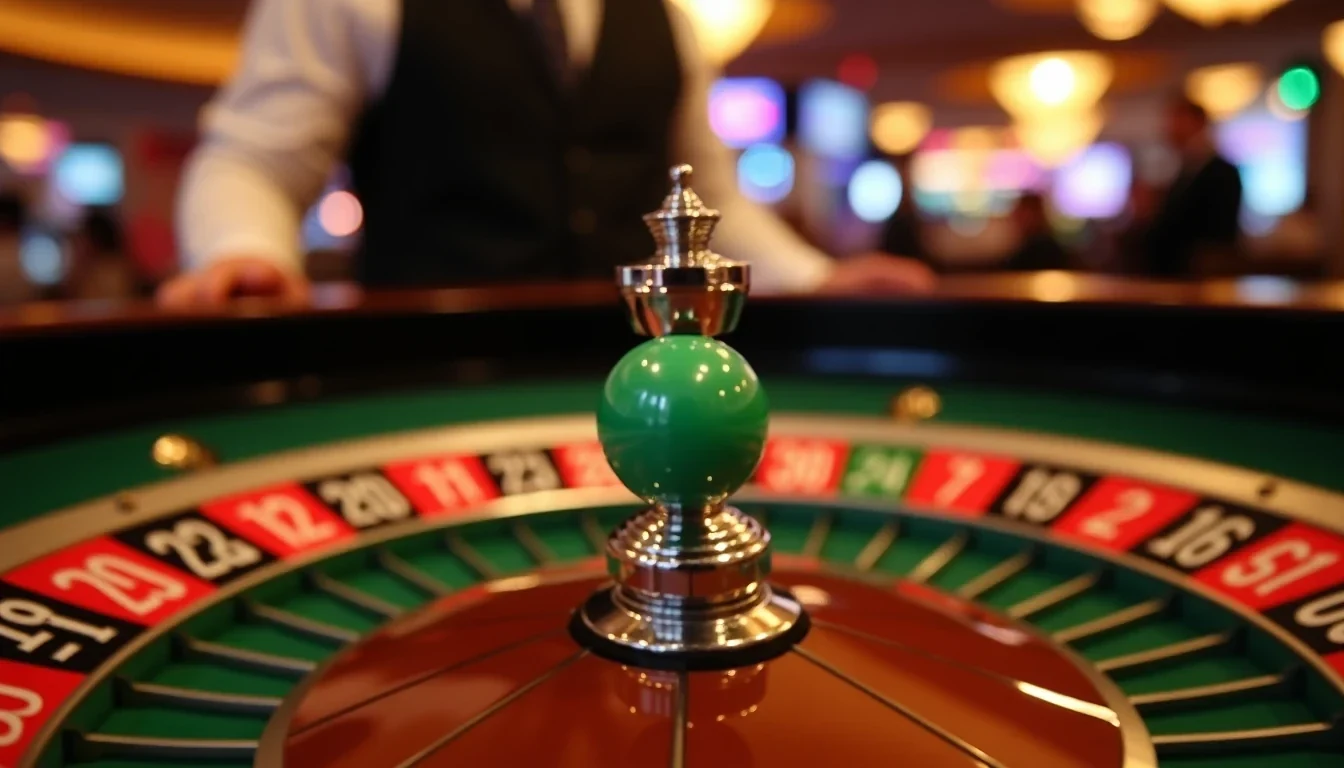
The second green pocket is where the wheel stops pretending. American roulette uses 00 as well as 0, which pushes the house edge to about 5.26%, nearly twice the cost of a single-zero wheel. Same red, same black, same bored dealer, same hopeful punters, worse maths.
Players pick a table for the chairs, the smoke, the side of the floor, even the crowd. Then they act surprised when the wheel quietly charges them more for the privilege. If two roulette tables look identical and one has a second green pocket, the one with 00 needs a better excuse than convenience.
The wheel is where the argument starts
American roulette has 38 slots. Eighteen are red, eighteen are black, and the remaining two are the green numbers 0 and 00. That second green pocket is the whole problem. It does not change the feel of the game; it changes the price of playing it.
On a single-zero wheel, there are 37 possible outcomes. On a double-zero wheel, there are 38. The payouts stay fixed because casinos do not rewrite the board every time the odds get less friendly. A straight-up number still pays 35 to 1 on both versions. Even-money bets still pay 1 to 1. The ball does not care that the payout stayed the same, and the house certainly does.
The extra pocket hurts so much because the reward for a hit is built for a smaller field than the one you are actually playing on. You are paid as if the wheel is slightly kinder than it really is. On the longer run, that gap is the tax.
The maths is plain once you stop pretending the tables are cousins
Single-zero roulette, the European or French version, has a house edge of about 2.70% on standard bets. American roulette pushes that to about 5.26%. The difference is not cosmetic or a rounding error; it is almost double.
Put it in rand terms. If you cycle R100 through the wheel over time, the expected loss on a double-zero wheel is about R5.26. On a single-zero wheel, it is about R2.70. Neither number is flattering, but one is clearly worse. When you repeat that across dozens or hundreds of spins, the gap gets ugly fast.
The worst part is how ordinary the damage looks spin by spin. One loss does not feel like much. Two losses do not feel like a pattern. A roulette wheel is patient, and that patience works for the casino. The edge takes its cut one spin at a time, which is why punters keep telling themselves the night is still salvageable right up until it is not.
Even-money bets are where the illusion survives
The favourite comfort bet is red, black, odd, even, high, low. It feels balanced because it sounds balanced. On an American wheel, red has 18 winning pockets out of 38. That is 47.37%, not 50%. On a single-zero wheel, red is 18 out of 37, which is still less than half, just less ugly.
The payout stays 1 to 1 either way. The casino does not need to fiddle the payout to make money. It only needs to keep one or two green pockets in the layout and let the maths do the work.
Many people miss this because the game looks familiar. The wheel spins. The dealer sweeps. The chips are the same colour. If you only pay attention to the surface, American and European roulette feel like twins. They are not. One of them quietly takes more from every even-money wager, and the extra pocket is doing the work.
Betting systems do not fix a wheel that is already priced against you
Martingale, Fibonacci, D’Alembert, Labouchère, all the usual furniture. I’ve heard every version of the story from men convinced the next progression will somehow change the maths. It never does; it only changes how fast the losses show up.
Those systems adjust stake size. They do not alter the wheel. They do not add winning pockets. They do not turn 00 into a useless ornament. The spin is still independent. The previous result has no memory. The ball does not care that you are due, nor does it care that three reds came up in a row and your cousin’s mate once made rent on a black run.
The hard limit is bankroll and table maximums. A negative progression looks clever until a losing streak gets long enough to smash the sequence. Then the whole thing collapses in the dullest way possible, which is exactly the way casinos prefer. On a double-zero wheel, that collapse comes sooner because every wager is already leaking more value.
So if someone tells you the betting pattern beats the wheel, ask them which part of the wheel changed. If the answer is “none”, you already know the rest of the story.
Check the wheel before you sit down
The sensible move is embarrassingly simple. Look at the wheel. Count the green pockets. One green pocket means single-zero. Two green pockets mean double-zero. If you are on a table with a 00, you are paying more for the same style of game, and no amount of lucky superstition changes that.
This is where many players get lazy. They compare the minimum bet, the atmosphere, the number of empty chairs, even the waiter service, but not the structure of the wheel. That is backwards. A table that costs less in expected loss is better value, even if the chair is slightly worse. Comfort is not a betting edge.
When I’m looking at land-based tables, I’d rather have the less glamorous wheel than the prettier room. Casino floors love the theatre of it all. Fine. I’m not there for the carpet. I’m there to avoid donating more than I need to.
The nicer version of roulette is still a casino game
Single-zero roulette is not a gift. It is simply less bad. If a table offers La Partage or En Prison on even-money bets, the edge drops again, to around 1.35% on those bets. That is a much more respectable number, though still not a charity. The point is not that roulette becomes friendly; the point is that some versions are less punishing than others, and the wheel tells you which camp you are in.
For South African players, checking the licence, checking the table, and asking the plain question saves money. Licensed land-based venues are where the action is supposed to be. If a roulette wheel is on offer, the first thing to inspect is not the dealer’s patter or the drink menu. It is the green paint on the wheel.
If a wheel has 00, you are paying for the extra pocket before the ball leaves the dealer’s hand.