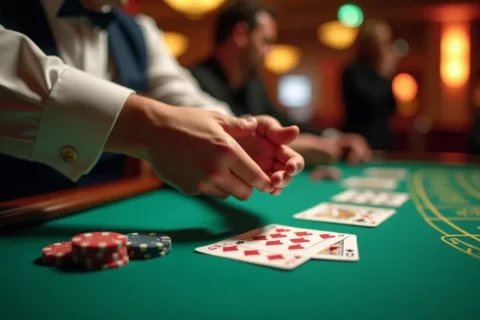
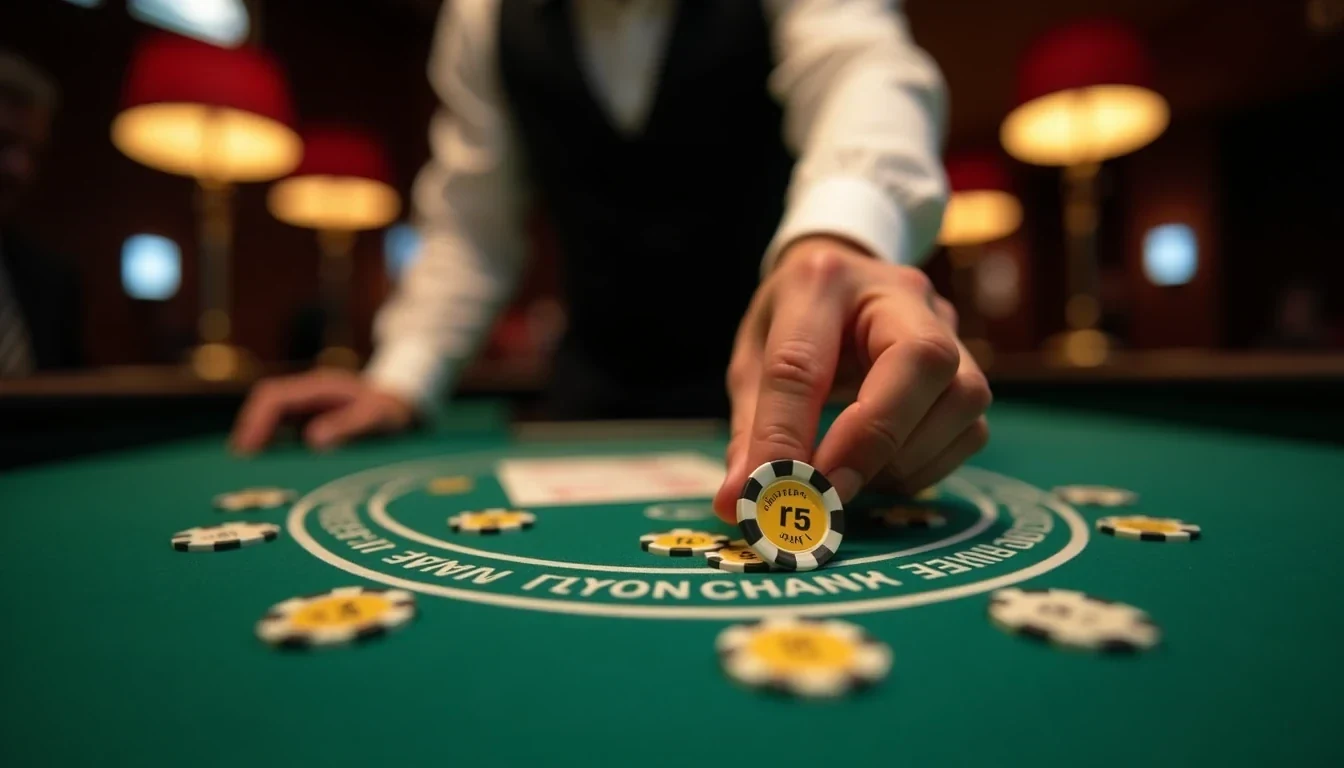
A R25 side bet on a Perfect Pair in blackjack pays out R625. That single number is printed in bright yellow on the felt, and it does exactly what the casino intends: it stops your eye, loosens your hand, and turns a boring stretch of small cards into a moment of possibility. The house edge on that same bet sits somewhere between 4% and 11%, depending on how many decks are in the shoe and how generously the pay table is structured. The main game you were playing, the one with the basic strategy you half-remember, carries an edge of roughly 0.5% to 1%. The side bet is a separate, worse proposition wearing the same uniform.
Where the Money Actually Goes
Casinos do not hide side bets in the back of the menu. They place them front and centre, within easy reach of your stack, available on every hand regardless of whether you are up or down. The psychology is straightforward. A player grinding through a cold shoe of blackjack, or watching the baccarat board run opposite to their pattern, experiences a specific kind of fatigue. The main game has turned monotonous. The side bet offers a jolt, a way to feel something other than the slow erosion of a bankroll. The minimum is usually small, R10 or R20, pitched at the exact threshold where it feels like nothing and therefore costs nothing to try.
That feeling is the product. The casino understands that a player who has been losing for twenty minutes is not making rational portfolio decisions about wager allocation. They are looking for a way to alter the texture of the evening. The side bet arrives as a solution to a problem the casino itself has engineered: a game whose natural rhythm includes long stretches of anticlimax. The accessibility is the trap. You do not need to learn new rules or move to a different table. You simply slide a chip into the designated circle and wait for a rare event to rescue your mood.
Reading the Pay Table Like It Matters
Every legitimate side bet in a licensed venue, whether on the Durban beachfront or in a Gauteng casino complex, carries a printed pay table. This is not decorative. It is the complete mathematical disclosure of what you are buying, and most players treat it as background noise. The table lists each winning outcome and its payout ratio. A Mixed Pair in Perfect Pairs might pay 5:1. A Coloured Pair pays 10:1 or 12:1. The Perfect Pair itself, same suit and rank, pays 25:1 or 30:1. The progression looks generous because it is designed to.
The pay table does not print the frequency of each outcome, but you can infer it. A 25:1 payout does not exist because the casino is feeling charitable. It exists because the event it rewards occurs roughly once in every sixty-five hands in a six-deck game, about 1.54% of the time. The casino has priced this bet so that even when it hits, the accumulated losses on all the non-pair hands more than compensate. You can perform a rough expected value calculation without a calculator. Multiply the payout by the approximate probability, subtract the probability of losing multiplied by your stake, and you will find a negative number. That negative number is the house edge, expressed in Rand and cents over time.
The 21+3 side bet, which combines your first two cards with the dealer’s up-card to make a three-card poker hand, operates on the same principle. A flush might pay 5:1, a straight 10:1, a three of a kind 30:1, a straight flush 40:1. The house edge on this bet ranges from roughly 2.7% to over 7%, again depending on the specific pay table and the number of decks. The main game of blackjack, played with correct basic strategy, gives the house about fifty cents for every hundred Rand you wager. The 21+3 bet, at its most favourable, gives the house two Rand and seventy cents on the same hundred. At its worst, it gives them seven Rand. This difference means you can play the main game for hours, but the side game burns through a modest bankroll while you are still waiting for your first straight flush.
The Specific Bets and Their Real Costs
In baccarat, the Dragon Bonus pays based on the margin of victory for either the Player or Banker hand, with escalating returns for natural wins and larger point differences. A nine-point win with a natural might pay 30:1. The bet requires a margin of victory, which sounds like it adds strategic texture to a game famously devoid of player decisions. It does not. The bet remains pure chance, and its house edge reflects that. The Pair bets in baccarat, whether on Player, Banker, or either, carry edges that similarly exceed the main game’s modest commission-adjusted advantage.
Poker-style table games offer some of the most transparent side bet structures. In Three Card Poker, the Pair Plus bet pays on any hand of a pair or better, independent of whether you beat the dealer. The simplicity is appealing. You do not need to worry about the dealer’s qualifying hand or the ante-play decision. You simply get paid for good cards. The trade-off is a house edge typically between 2.3% and 7.3%, depending on the pay table, against a main game edge that can be under 2% with correct strategy. Caribbean Stud Poker often features a progressive jackpot side bet, R10 or R20 to qualify for a Royal Flush payout that might reach six figures. The headline is irresistible. The mathematics are punishing, with house edges that can exceed 20% and sometimes climb past 30% depending on the jackpot seed and contribution rate.
Why the Main Game Strategy Does Not Help
The critical misunderstanding, which separates a player who loses slowly from one who loses quickly, is the belief that skill in the main game transfers to the side bet. It does not. Basic strategy in blackjack reduces the house edge by dictating optimal decisions based on your cards and the dealer’s up-card. Those decisions have no bearing on whether your first two cards form a pair. The side bet resolves before you make any of those decisions. You could play perfect basic strategy for a thousand hands and it would not improve your Perfect Pair odds by a fraction of a percentage point.
This independence makes side bets so profitable for the house and so dangerous for the player. They attach themselves to games of skill or partial skill, borrowing the credibility of those games, while operating as pure chance with dramatically worse odds. The casino does not need to deceive you about this. The deception is self-administered, a willingness to believe that a bet placed on the same felt, with the same cards, must somehow share the characteristics of the game you have studied.
What to Do Before the Chip Leaves Your Hand
The practical advice is almost insultingly simple, which is why so few people follow it. Read the pay table. Not a glance, a reading. Identify every payout, note which outcomes are grouped together, and recognise that the highest payout is there to distract from the frequency of the lowest. If you have time before you sit down, search for the published house edge of that specific bet with that specific pay table and that number of decks. The information is available. Casinos do not conceal it because they know most players will not look.
Calculate what a session of side bets actually costs. At R20 per hand, fifty hands an hour, a 6% house edge consumes R60 every sixty minutes in expected value. That is R60 on top of whatever the main game is doing to your bankroll. Over an evening, it is the difference between breaking even and needing a stop at the ATM. The side bet is not a small indulgence. It is a parallel game with a parallel tax, and the tax rate is several times higher than the one you were already paying.
The honest player, the one who treats gambling as an entertainment expense with a known price, should price the side bet accurately. Sometimes that means skipping it entirely. Sometimes it means treating it as a single ceremonial wager, the cost of a moment of hope, budgeted and spent with full awareness that it is not coming back. It never means treating it as a sensible component of a larger strategy, or believing that the big payout number on the felt represents anything other than the casino’s confidence that you will not do the maths.