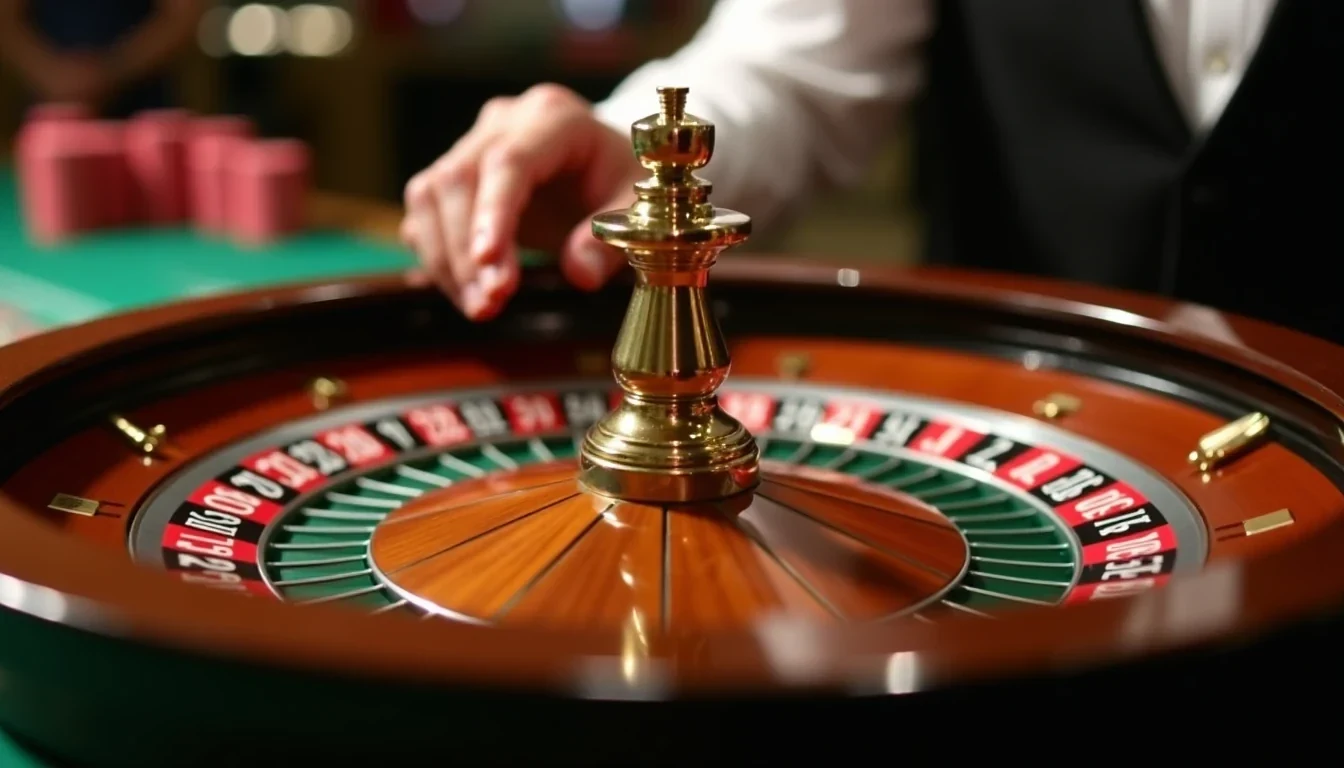
The green zero is the whole trick. On a single-zero roulette wheel, the casino needs no sleight of hand, bad lighting, or a bloke in a blazer pretending to be unlucky. It needs only one extra pocket, painted green, sitting there in plain sight while the table still pays even money as if the wheel were neatly split into 36 equal outcomes.
People miss this when they call red or black a fifty-fifty bet. It looks and feels that way, but it is not. The wheel has 18 red numbers, 18 black numbers, and one green zero. That one pocket tilts the whole thing in the house’s favor without hiding a thing.
One green pocket changes the whole table
Roulette is one of those games that keeps its own scam in the open. You can stand right there, look at the wheel, and count the pockets: 18 red, 18 black, one green zero. Nothing is hidden.
The casino does not cheat on the spin. The problem is cleaner than that: the casino pays you as though the wheel had only 36 pockets when it actually has 37. That extra pocket is the edge, and it funds the lights, the staff, the carpet, the cocktails, the rent, and whatever else keeps the place running.
If I bet R100 on red, the table pays me R100 profit if red lands, plus my stake back. That sounds fair until you do the count properly. On a 37-pocket wheel, red wins on 18 outcomes. It loses on 19. Those 19 losses are 18 black numbers plus the green zero. The zero does the heavy lifting for the casino while dressed up like a minor detail.
I never talk about red and black as if they are a perfect split. They are not. They are close enough to fool a tired mind and just far enough apart to keep the house fed.
The maths is rude but simple
The true chance of winning an even-money bet on a single-zero wheel is 18 out of 37, about 48.65 percent. The chance of losing is 19 out of 37, about 51.35 percent.
People hear that and usually reach for the wrong reaction. They want to say, “But that’s only one pocket.” Exactly. One pocket is the whole point. One pocket, one small difference, one persistent drag on every even-money bet.
The payout does not change to match the true odds. The casino makes its margin here. If the table paid true odds, red should pay slightly less than even money, because the chance of landing red is not 50 percent. The house does the opposite. It keeps the friendly-looking 1 to 1 payout and pockets the mismatch.
Over time, that mismatch adds up to a house edge of 1/37, which is 2.7027 percent. Call it 2.70 percent if you like round numbers. On average, over a very long run, a player wagering R100 a spin gives up about R2.70 to the table. Not every spin, obviously. Roulette has plenty of short-term nonsense in it. But if you strip away the drama and look at the maths across thousands of spins, that is the price of admission.
The casino does not need to win every round. It only needs the wheel to keep obeying the arithmetic.
Why the wheel fools people
I know exactly why red and black feel like a coin toss. The layout trains you to think that way. Eighteen red pockets, 18 black pockets. It looks balanced enough to satisfy the lazy part of the brain that wants symmetry and hates counting.
Then the green zero sits there like a quiet lie detector.
Gamblers, myself included, are always looking for patterns we can trust. We tell ourselves a streak is due to break. We tell ourselves black has been “cold” long enough to be overdue. We tell ourselves the wheel has memory, which is beautiful nonsense if you think about it for more than ten seconds. A wheel has no mood. It has no resentment. It has one extra pocket and a payout structure designed to ignore it.
The zero also disappears from the conversation when players compare wins and losses. If red lands twice and black lands twice, the table feels balanced. If the zero lands once in the middle, the feeling is still balanced if you were on the right side of the coin and annoyed if you were not. The maths does not care about your feeling. It keeps the full count.
Even-money roulette bets are such efficient little traps. They look simple enough for casual play. They are simple, but that does not make them fair.
The edge is visible, not hidden
I have more respect for this version of the game than for the kind of nonsense that pretends the player has a secret system. At least roulette is honest about its dishonesty. The green zero is right there on the felt, right there on the wheel, right there in the result line. There is no concealed mechanism, no hidden algorithm. No one is sliding the ball with a magnet under the tablecloth.
The casino’s advantage sits in one visible pocket and a payout schedule that flatters the player just enough to keep the wheel turning. That is the whole arrangement. It is almost rude in its clarity.
This also explains why single-zero wheels are preferred by players who understand the maths. A European-style wheel with one zero is still a losing game for the player in the long run, but it is less punishing than the double-zero version you see in some other markets. Once you add a second green pocket, the margin grows uglier. But even with just one zero, the table still keeps its cut.
For a casino, that cut is not an accident. It is the business model. The place does not pay for itself on hope, drunk confidence, or the guy at the end of the rail who thinks he has cracked the code. It pays because enough people keep making bets against 37 possible outcomes while being rewarded as though there were only 36.
Why I still play it
I still like roulette. That part has not changed. It has theatre, pace, noise, the little ceremony of the spin, the clatter of the ball, the shared breath around the table when it hangs on the rim for a second too long. It is one of the few casino games that still feels physical, which is probably why people attach so much superstition to it.
But I no longer kid myself that red and black are a fair coin toss in a tuxedo. They are not. They are a wager against a visible mathematical edge, and the green zero is the reason.
The game is not worthless. It is expensive entertainment. If you know the cost, you can decide whether the fun is worth paying for. If you do not know the cost, the wheel will happily teach you while taking your money at the same time.
What it means for the way I bet
Once you accept the zero for what it is, you stop pretending the table owes you balance. That is a useful correction. It does not magically improve your results, because no betting system changes the underlying maths, but it does strip away one comfortable lie.
A lot of gamblers chase even-money bets because they feel safe. They are not safe. They are simply easier to follow in the moment. The zero makes sure the casino’s margin stays alive on every spin, whether the bet is red, black, odd, even, high, or low. The label changes. The edge does not.
I pay more attention to bankroll and session length than to superstition. If the wheel is taking 2.70 percent in the long run, then the real question is how much entertainment I want for the money and how long I can sit there before the arithmetic starts feeling personal. In a live casino, on a local site, or with a licensed bookmaker running roulette as part of the mix, the mechanism is the same. One green pocket keeps the table in business.
The zero is not some secret flaw in the game. It is the game.