A casino does not need to cheat you to beat you. It only needs slightly lopsided math, applied thousands of times, while players tell themselves the next spin will sort out the last one.
This is the whole trick, and it is not a trick at all. The house edge is the price of the session. If I sit down knowing that price, I am gambling. If I sit down pretending the game owes me a correction, I am just feeding a superstition with a card machine.
The house edge is the whole deal
Most players hear “house edge” and think it sounds like a hidden charge buried in the rules somewhere. That is backwards. The edge is the rules.
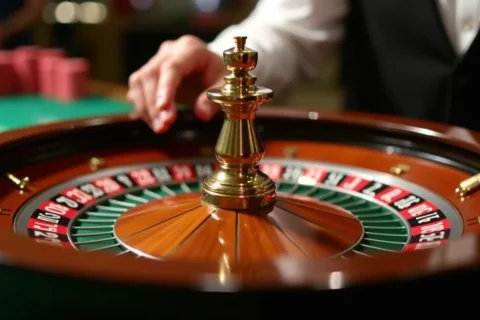
Take European roulette. The wheel has 37 pockets, from 1 to 36 plus the zero. A straight-up number bet should, on pure odds, pay as if there were 37 possible outcomes. Instead, the table pays 35 to 1. That tiny gap is the casino’s margin. On a single number bet, the edge works out at about 2.7 percent.
American roulette is uglier because it adds a double zero. Now there are 38 pockets, but the straight-up payout still sits at 35 to 1. This pushes the house edge up to about 5.26 percent. It is the same game with worse pricing. You can dress it up with felt and chrome, but the math is rude and simple.
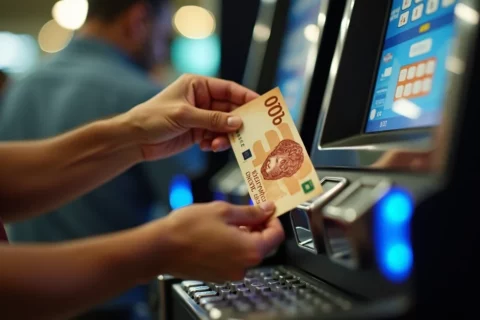
Slots work on the same principle, just wrapped in a different costume. If a machine is set to an RTP of 92 percent, it is built to give back about R92 for every R100 wagered over time, which leaves an 8 percent edge for the house. This does not mean every R100 note gets audited by a tiny man in a suit. It means the machine’s long-run payout schedule is set below the amount being fed into it.
Blackjack is the outlier that tempts people into feeling clever. With decent basic strategy and standard rules, the house edge can get down to roughly 0.5 percent to 1 percent. This is low, not zero. The dealer still gets to act after you. You can play the hand well and still be paying for the privilege of doing so.
Expected loss is just the bill in disguise
If I wager R1,000 on European roulette over the course of a session, the expected loss is about R27. On a machine with a 92 percent RTP, R5,000 in wagers points to an expected loss of about R400. These are not prophecy numbers. They are averages, the sort of averages that only make sense once enough spins, hands, or button presses have gone by.
This is where people start lying to themselves. A few decent wins and the brain decides the game is being generous. A bad run and the brain decides the game has become unfair. Both reactions are nonsense. The house edge does not become offended, and it does not become charitable. It sits there, unchanged, while your mood does the running around.
The more honest way to think about it is plain enough: if I buy an afternoon of play, I should know roughly what that afternoon costs. That cost is not a conspiracy. It is the entertainment fee. A cricket ticket, a rugby ticket, or a gig ticket costs money whether the show is brilliant or forgettable. Gambling is just the shadier cousin of a night out, because the return is uncertain and the pricing is built for the venue, not for me.
The wheel does not remember your mood
The gambler’s fallacy is one of the oldest jokes in the business, except nobody laughs while they are losing money. After five reds, plenty of people start muttering that black is due. After a run of busted hands, they start raising stakes because the table “has to turn”.
It has to do nothing.
Each wager stands on its own. The wheel does not store grudges. The slot machine does not know you are annoyed. The dealer does not care that you were “close” three hands ago. Once you understand that, the whole idea of chasing losses starts to look as foolish as it is. You are not recovering anything. You are buying more exposure to the same edge that already took the first slice.
The other trap is the illusion of control. Superstition loves gambling because it gives us somewhere to dump blame. Lucky numbers, lucky seats, lucky timing, lucky pants, lucky nothing. I have seen people treat a ritual like a strategy. It is never a strategy. At best, it is theatre. At worst, it is a down payment on a more expensive lesson.
The dangerous part is not the superstition itself. It is the emotional follow-through. A player gets clipped, feels insulted by the result, then decides to win the money back in the same session. That is how the bill stops being manageable and starts becoming a problem.
Budget first, ego never
The cleanest way to gamble is to decide the cost before the first bet lands. Not after the first loss. Before. If I have R300 set aside for a night’s entertainment, then R300 is the ceiling. Once it is gone, I am done. No ATM run, no card swipe, no “just one more hundred”.
This sounds obvious until you watch people violate it with religious passion.
A budget works only if it is disposable income. Rent money, groceries, school fees, taxi fare, all of that is off the table. If the money is needed elsewhere, the house edge is not your biggest problem. Your gambling habits are. The smartest player in the room is the one who has already decided how much fun is enough.
Winnings should be treated as a bonus, not fuel. The minute a payout becomes new ammo, the session has a way of stretching long past the point of dignity. Cash out, pocket it, and leave the machine hungry. That is much less glamorous than the stories people tell later, but it is also how adults avoid turning a lucky run into a very expensive memory.
The local picture is not mysterious
Around here, the legal and practical picture is not even that complicated. Land-based casinos such as Montecasino and GrandWest offer the usual mix of roulette, blackjack, and slots. Licensed bookmakers like Hollywoodbets and Betway run sports betting under provincial licences. The National Gambling Board and provincial licensing authorities exist precisely because this is supposed to run inside a regulated framework, not in a cloud of fantasy.
For table games, the rules decide the edge. For slots, the RTP does. For sports betting, the margin sits in the price. Different products, same basic idea: the operator prices the game so that the long-run math favours the house.
The fantasy that keeps getting sold is that a bad run proves unfairness. It does not. It proves variance doing what variance does while the edge quietly collects its due. Casinos do not need to fiddle outcomes after the bet lands. They do not need a secret lever under the table. They just need enough play, enough repetition, and enough people who mistake a negative expectation for a temporary insult.
This is the bit people never want to hear, because it removes the romance. The machine did not wrong you. The game worked exactly as priced.